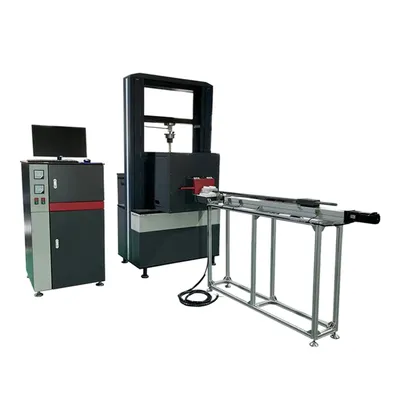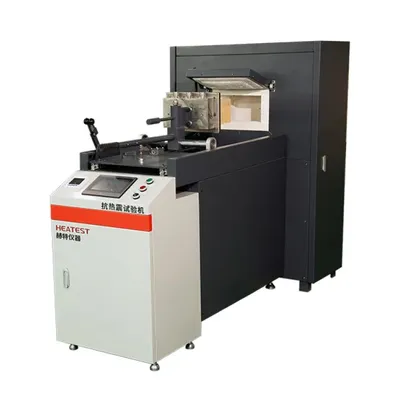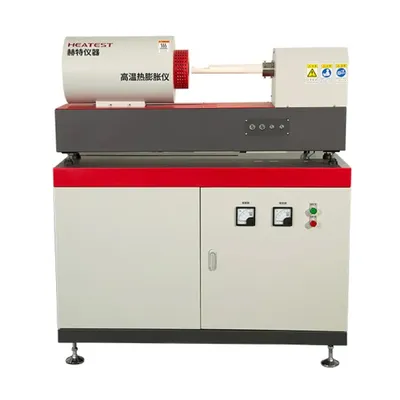
Selecting the right muffle furnace for your laboratory or industrial application often comes down to a fundamental choice: a benchtop model or a floor model. Both designs serve the same core purpose—high-temperature heat treatment, ashing, and material analysis—but they differ significantly in footprint, capacity, and operational flexibility. Understanding these differences is critical to making a cost-effective and space-efficient decision. At Heatest Instrument, we help customers evaluate real-world requirements to match the ideal configuration. This article provides a professional, side-by-side comparison of the pros and cons of benchtop and floor muffle furnaces, empowering you to choose with confidence.
Understanding the Core Differences Between Benchtop and Floor Model Muffle Furnaces
Before diving into specific advantages and disadvantages, it is essential to grasp the fundamental design and application distinctions between these two furnace types.
Space and Portability
Benchtop muffle furnaces are compact units designed to sit on a laboratory workbench or countertop. Their smaller footprint makes them ideal for laboratories with limited floor space or for applications where the furnace must be moved frequently. Floor models, on the other hand, are large, freestanding units that occupy a dedicated area on the laboratory floor. They are typically heavier and require a permanent installation with adequate ventilation and electrical supply.
Capacity and Throughput
Floor model muffle furnaces generally offer larger chamber volumes, ranging from 30 liters up to several hundred liters, allowing for batch processing of multiple samples simultaneously. Benchtop units are more compact, typically with chamber volumes under 20 liters, suitable for small-scale sample processing or occasional use. This capacity difference directly impacts throughput and the types of materials that can be processed.
Key Pros and Cons of Benchtop Muffle Furnaces
Benchtop models are popular in educational institutions, research laboratories, and quality control settings where space is at a premium. Below are their primary advantages and limitations.
- Pros:
- Space-saving design: Ideal for laboratories with limited floor area; fits easily on standard benchtops.
- Portability: Many benchtop units are light enough to be moved between workstations or stored when not in use.
- Lower initial cost: Generally more affordable than floor models, making them budget-friendly for small labs.
- Faster heat-up and cool-down: Smaller chamber volume requires less energy and time to reach target temperatures.
- Easy installation: No special floor reinforcement or complex electrical upgrades needed in most cases.
- Cons:
- Limited capacity: Not suitable for large sample batches or oversized workpieces.
- Lower maximum temperature range: Some benchtop models top out at around 1100°C, whereas floor models can exceed 1600°C.
- Restricted access: Smaller door openings may make loading and unloading cumbersome for large crucibles.
- Less robust insulation: Compact design often means thinner insulation, potentially leading to higher external surface temperatures.
Key Pros and Cons of Floor Model Muffle Furnaces
Floor models are the workhorses of industrial labs, material testing facilities, and production environments. Their pros and cons reflect their larger scale and heavier-duty construction.
- Pros:
- High capacity: Large chamber volumes enable processing of multiple samples or large components in a single run.
- Extended temperature range: Many floor models can achieve temperatures up to 1800°C, suitable for advanced ceramics and refractory materials.
- Superior thermal uniformity: Better insulation and sophisticated heating element layouts ensure consistent temperature distribution across the chamber.
- Durability and longevity: Built with heavy-duty frames and high-grade refractory materials for continuous industrial use.
- Advanced control options: Often include programmable controllers, multi-zone heating, and data logging capabilities.
- Cons:
- Large footprint: Requires dedicated floor space; may not fit in small or crowded laboratories.
- High initial investment: Cost significantly more than benchtop equivalents, both in purchase price and installation.
- Higher energy consumption: Larger chambers and longer heat-up cycles increase electricity usage.
- Slower heat-up and cool-down: Massive thermal mass takes hours to reach temperature and cool safely.
- More complex installation: May require reinforced flooring, dedicated high-amperage electrical circuits, and proper exhaust ventilation.
How to Choose the Right Muffle Furnace for Your Application
The decision between a benchtop and floor model should be based on a thorough assessment of your specific operational needs. Below are three critical factors to consider.
Laboratory Space Considerations
If your lab has limited floor space or the furnace must be shared among multiple workbenches, a benchtop model from Heatest Instrument provides an excellent fit. Conversely, if you have a dedicated high-temperature processing area with ample room, a floor model can maximize productivity without spatial constraints.
Sample Volume and Temperature Requirements
Evaluate the maximum sample size and the number of samples you process daily. For small-scale ashing or annealing of a few grams of material, a benchtop unit is sufficient. For large ceramic parts or bulk material testing, a floor model is necessary. Also consider your temperature needs: if your process requires consistent performance above 1200°C, floor models are typically the only viable option.
Budget and Long-Term Value
While benchtop furnaces have a lower upfront cost, floor models often deliver better total cost of ownership when high throughput is required. The energy efficiency, durability, and higher resale value of floor models can offset the initial investment over years of service. Always factor in installation, maintenance, and utility costs.
Why Heatest Instrument Offers Reliable Solutions for Both Configurations
Heatest Instrument is a trusted manufacturer of high-quality muffle furnaces for laboratory and industrial applications. Our product line includes both benchtop and floor models designed with precision engineering, advanced safety features, and energy-efficient insulation. We provide custom chamber sizes, multi-stage programmable controllers, and optional atmosphere control to match your exact process requirements. With decades of experience and a global support network, Heatest Instrument ensures you receive a furnace that not only meets but exceeds your expectations for reliability, uniformity, and longevity.
In summary, the choice between a benchtop and floor muffle furnace is not about which is better overall, but which aligns best with your space, capacity, temperature, and budget constraints. Carefully weigh the pros and cons outlined above, and consult with Heatest Instrument’s technical team to find the optimal solution for your specific workflow. A well-informed decision today will pay dividends in operational efficiency and sample quality for years to come.