
A muffle furnace is one of those instruments that quietly determines whether an experiment succeeds or fails. Whether you are ashing samples, sintering ceramics, annealing metals, or running loss-on-ignition tests, the furnace you select decides how repeatable your results will be and how much time your team spends monitoring equipment. Because laboratory budgets are finite and bench space is scarce, the decision deserves more than a quick glance at a catalogue price. This guide walks through the specifications that actually matter, the trade-offs between furnace types, and the questions worth asking a supplier before you place an order.
Define the Job Before You Define the Specification
Most purchasing mistakes trace back to the same root cause: the furnace is chosen before the process is understood. Before comparing models, write down four things about your application.
- Working temperature: the temperature your samples must actually reach, not the highest number you can imagine needing.
- Atmosphere: ambient air, inert gas, vacuum, or a stream of reactive gas.
- Sample chemistry: whether the load releases corrosive vapours, smoke, or volatile organics.
- Throughput and duty cycle: a few runs per week versus continuous daily operation.
These four answers eliminate most of the market immediately and prevent you from paying for capabilities the lab will never use.
Temperature Is a Range, Not a Number
A furnace rated to 1400°C should not be run at 1400°C continuously. As a practical rule, plan for a working temperature around 80 to 85 percent of the rated maximum, which leaves headroom for the heating elements to recover between cycles and extends their service life. The rating also determines which element technology you are buying into: resistance wire alloys for lower ranges, silicon carbide elements for the mid range, and molybdenum disilicide for the highest temperature work. Each step up in temperature raises cost, reduces element life, and demands more careful control of heating and cooling rates.
Atmosphere and Sample Chemistry
If your samples produce smoke, acid vapours, or organic decomposition products, an exhaust port with controlled extraction is not optional. Corrosive fumes attack thermocouples, elements, and refractory insulation long before the warranty expires. For processes that require inert gas or vacuum, the chamber design changes fundamentally, and a standard box furnace will not substitute. Deciding this early prevents a costly upgrade later.
Specifications That Separate an Adequate Furnace from a Good One
Chamber Size and Geometry
Buy for the largest routine load plus a margin, not for the largest load you can imagine. An oversized chamber heats slowly, wastes energy, and delivers poorer uniformity when nearly empty. A practical guideline is to keep the sample load below roughly two-thirds of the chamber volume, with clearance on all sides so hot air can circulate. Chamber shape matters too: a shallow, wide chamber suits flat crucibles and trays, while a cubic chamber handles taller crucibles and stacked work.
Temperature Uniformity and Control
Uniformity is the specification that most directly affects data quality, and it is the one buyers most often overlook. Ask the supplier for a uniformity figure measured at a specific temperature, since a claim of excellent uniformity at 500°C tells you little about behaviour at 1200°C. A programmable controller with multi-step ramp and soak profiles is essential for reproducible results, and over-temperature protection should be a separate, independent circuit rather than a software setting. Thermocouple type should match your working range; using a lower-grade sensor at high temperature introduces drift that shows up as inconsistent results months later.
Insulation, Energy Use, and Heat-Up Time
Lightweight ceramic fibre insulation heats and cools faster than traditional dense firebrick, which shortens cycle times and reduces power consumption. Faster is not always better, however: if your process requires slow, controlled cooling to avoid thermal shock or cracking, verify that the controller and insulation combination can actually achieve a slow ramp-down. Also check the exterior surface temperature and door sealing, both of which affect operator comfort and energy loss in a busy lab.
Comparing the Main Furnace Types
The right category depends entirely on the process requirements identified above.
- Box (chamber) furnace — the general-purpose workhorse for ashing, annealing, and heat treatment. Advantages: large usable volume, simple loading, lowest cost per litre of chamber space.
- Tube furnace — best for controlled atmospheres, flowing gas, and small samples requiring precise, uniform heating. Advantages: excellent uniformity, easy gas sealing, fast ramping of small loads.
- Atmosphere or vacuum furnace — required when oxidation must be eliminated. Advantages: process purity, compatibility with reactive materials, better surface finish on treated parts.
- Ashing furnace — configured with forced exhaust and chemically resistant internals for food, environmental, and polymer sample preparation. Advantages: safe removal of combustion by-products and cleaner chamber conditions over time.
Safety, Compliance, and Lab Integration
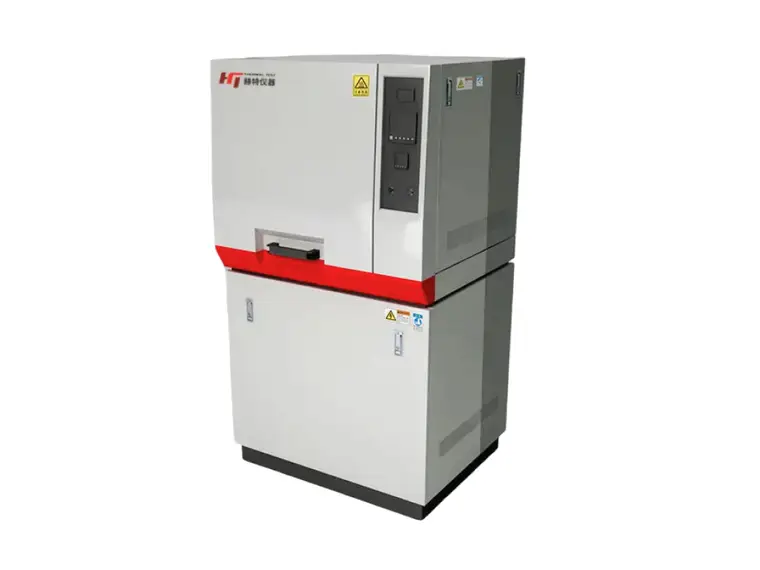
A furnace is a high-temperature, high-current device, and the details around installation are frequently underestimated. Confirm the electrical supply available in your lab before ordering, because three-phase or high-amperage single-phase requirements may force an electrical upgrade. Verify that the unit carries the relevant safety certification for your region, and check whether the door interlock, thermal cut-out, and earth leakage protection meet your institution's risk assessment standards.
Also consider the practical realities: heat radiating into a shared workspace, clearance required around the casing, ventilation capacity, and whether the unit needs to sit on a dedicated bench or floor stand. These factors are easier to plan for before delivery than after.
What to Ask a Supplier Before You Buy
Technical specifications are only half the purchase. The other half is the support behind the instrument. A short conversation with the supplier will reveal a great deal.
- Can you provide a uniformity test report at my working temperature?
- What is the expected element life under my duty cycle, and what does replacement cost?
- Is calibration documentation traceable, and how often is recalibration recommended?
- Are spare parts and thermocouples held in stock, and what is the typical lead time?
- Can the controller be configured for my specific ramp and soak profile?
Manufacturers that serve laboratories directly, such as Heatest Instrument, typically work with buyers at this stage to match chamber configuration, controller programming, and exhaust arrangements to the actual process rather than selling a standard catalogue unit. That kind of application input is worth more than a marginal price difference, particularly when a single furnace will serve multiple research groups for a decade.
Frequently Asked Questions
What working temperature should I specify?
Choose the highest temperature your routine process requires, then select a furnace rated roughly 15 to 20 percent above it. This headroom protects element life and gives you flexibility for occasional higher-temperature work.
Do I need a programmable controller?
If reproducibility matters, yes. A programmable controller lets you define heating rates, dwell times, and cooling profiles, which is what makes results comparable between operators and between batches.
How is chamber size determined?
Measure your largest routine sample or crucible arrangement, add clearance for air circulation, and select the smallest chamber that comfortably fits it. Oversizing reduces uniformity and increases energy consumption.
How often should the furnace be calibrated?
Most quality systems expect annual verification at minimum, with more frequent checks in laboratories operating under accreditation requirements or running continuous high-temperature cycles.
Final Considerations
Choosing a muffle furnace is ultimately a process of elimination. Define the working temperature, atmosphere, sample chemistry, and throughput first; then match chamber size, uniformity, and control capability to those requirements; and finally evaluate the supplier on documentation, spare parts, and application support. A furnace selected this way will still be producing consistent, defensible results long after a cheaper impulse purchase has been replaced.