
A muffle furnace for annealing and heat treatment is not simply a heated box. It is a controlled thermal environment where temperature uniformity, heating rate, atmosphere, and repeatability determine whether a metal part becomes softer, stronger, or more ductile. For buyers, the challenge is matching furnace design to the actual process rather than choosing the highest temperature or the lowest price. Whether you are relieving stress in machined steel, annealing copper, hardening tool steel, or processing ceramics, the right muffle furnace protects the workload from contamination and delivers a repeatable thermal profile. This article explains what to evaluate, how the furnace supports annealing and heat treatment, and where Heatest Instrument fits into a practical procurement plan.
What a Muffle Furnace Does in Annealing and Heat Treatment
In a muffle furnace, the workload sits in an inner chamber separated from the heating elements and combustion products. The muffle acts as a barrier, so the material is heated primarily by radiation and convection from the chamber walls. This design reduces direct contamination from element scaling, dust, and exhaust gases, which is important for clean annealing and heat treatment. It also helps protect sensitive alloys, laboratory samples, and small precision parts from uneven heat and surface reactions.
Annealing uses controlled heating and cooling to soften metal, relieve internal stresses, refine grain structure, and improve machinability. Heat treatment covers a broader family: normalizing, hardening, tempering, solution treatment, aging, stress relief, and sintering. A muffle furnace supports these processes when it can hold a set point, ramp at a defined rate, and distribute heat evenly around the load.
- Clean chamber environment for sensitive alloys and lab samples.
- Uniform temperature zones to avoid hard or soft spots.
- Programmable profiles for ramp, soak, and controlled cooling steps.
- Repeatable results for quality control and process validation.
Critical Performance Factors for Annealing and Heat Treatment
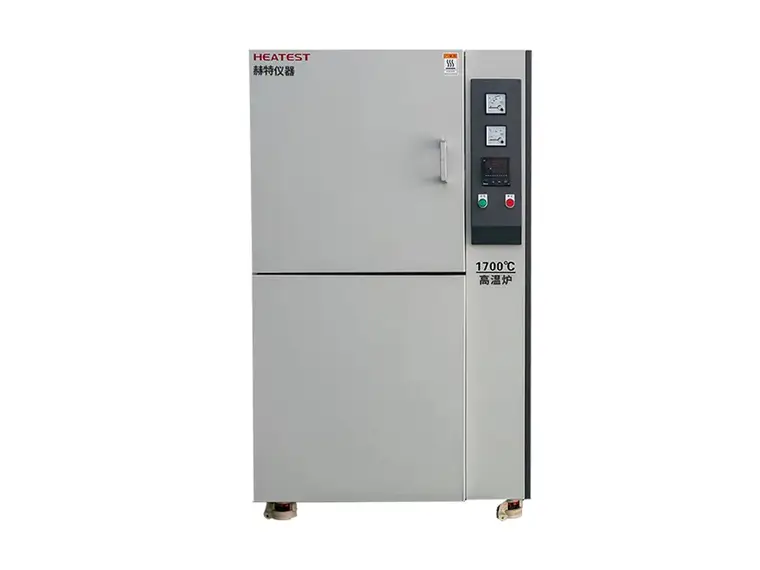
Temperature Uniformity and Control Accuracy
A furnace may claim a maximum temperature, but the more useful question is how evenly it holds temperature across the usable chamber. Poor uniformity can leave part of a load under-annealed while another part is over-heated, causing inconsistent hardness, grain size, or residual stress. Look for PID controllers, multiple thermocouples, over-temperature protection, and documented uniformity data. For annealing, a narrow soak band helps achieve consistent grain growth and hardness. For hardening, it reduces the risk of incomplete austenitization or excessive grain coarsening.
Heating Rate and Thermal Profile
Ramp rate affects distortion, cracking, and phase transformation. A programmable controller should allow multi-step profiles with soak times and controlled cooling. For stress relief annealing, a slow ramp and controlled cooling are often as important as the peak temperature. For hardening, the furnace must reach the austenitizing temperature reliably before the part is quenched. The controller should store and repeat these profiles without operator guesswork.
Atmosphere and Contamination Control
Standard muffle furnaces operate in air. If the process requires inert gas, vacuum, or reducing atmosphere, a retort or gas-tight muffle may be needed. Atmosphere control matters for reactive metals, bright annealing, and processes where oxidation or decarburization must be limited. Even in air atmospheres, a clean muffle chamber reduces contamination from heating elements, insulation dust, and previous workloads.
Chamber Size and Load Configuration
Chamber dimensions, door design, shelving, and load weight must match the parts. Overloading blocks radiation paths and creates cold spots. A furnace that is too large for a small load wastes energy and may lose control accuracy. A furnace that is too small forces tight packing, uneven heating, and longer cycles. The best choice balances current batch size with realistic future production.
How to Select the Right Muffle Furnace
Selection should begin with the material, target properties, and cycle specification. A furnace bought only on temperature rating may fail when the real requirement is atmosphere control, fast ramp, or documented uniformity. Use the following steps to narrow the options:
- Define the process: annealing, hardening, tempering, normalizing, sintering, or another heat treatment.
- Confirm maximum operating temperature with a safety margin. Common muffle furnaces reach 1200°C, 1400°C, 1600°C, or 1700°C, but the working temperature must suit the alloy and load.
- Specify chamber size based on part dimensions and batch volume, not only on current production.
- Choose the controller: single set point, multi-step ramp and soak, data logging, and alarm outputs.
- Evaluate atmosphere requirements: air, inert gas, or gas-tight retort.
- Check safety features: over-temperature cut-off, door interlock, thermal fuse, and emergency stop.
- Review service access, element replacement, insulation condition, and calibration support.
For buyers comparing quotations, ask for a test report or a guaranteed temperature uniformity map. A lower-priced furnace that creates a wide spread around the load can increase scrap, rework, and energy cost. The total cost of ownership includes cycle time, power consumption, maintenance, and calibration downtime.
Matching Furnace Type to Material and Process
Not every annealing job needs the same furnace. Material grade, part size, atmosphere sensitivity, and production volume all influence the decision.
- Laboratory muffle furnaces: small chambers, fast heating, clean operation for samples, research, and quality testing.
- Industrial muffle furnaces: larger chambers, robust insulation, and higher throughput for production heat treatment.
- High-temperature muffle furnaces: ceramic fiber insulation and premium elements for 1400°C to 1700°C applications.
- Gas-tight or retort muffle furnaces: controlled atmosphere for reactive metals or oxygen-sensitive processes.
Applications of Muffle Furnaces in Annealing and Heat Treatment
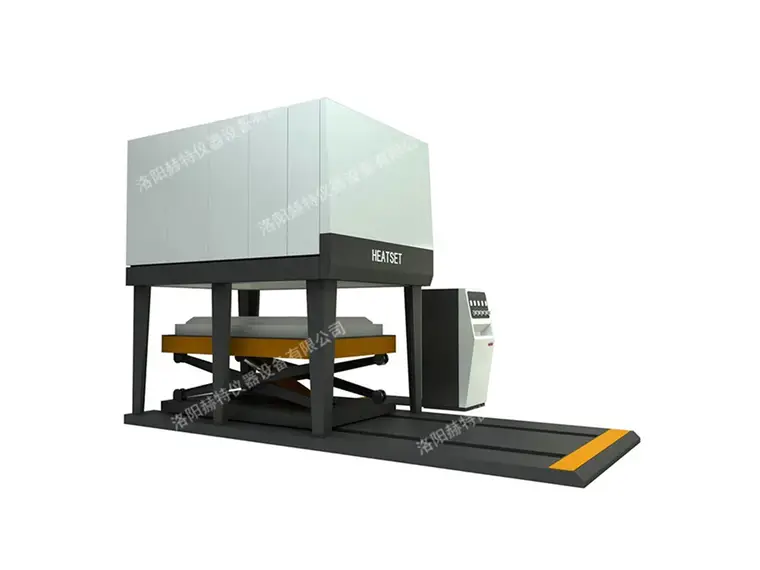
Muffle furnaces are used across metals, glass, ceramics, and advanced materials. Typical annealing and heat treatment tasks include:
- Stress relief annealing of welded, cast, or machined components.
- Full annealing and process annealing of carbon steel, alloy steel, copper, and brass.
- Spheroidizing annealing to improve machinability of high-carbon steel.
- Normalizing to refine grain structure and homogenize microstructure.
- Hardening and tempering of tool steel, dies, and cutting tools.
- Solution treatment and aging of aluminum and nickel alloys.
- Sintering, calcination, and ceramic firing where clean heat is required.
Each application has a thermal fingerprint. For example, stress relief usually requires a slow ramp, a soak below the transformation temperature, and controlled cooling. Hardening may require a fast austenitizing step followed by quenching outside the furnace, then tempering in the same or a separate muffle furnace. The furnace must be able to reproduce that fingerprint cycle after cycle.
Why Heatest Instrument for Muffle Furnace Solutions
Heatest Instrument supplies muffle furnaces for annealing and heat treatment with a focus on practical process control. Instead of offering only a temperature rating, Heatest Instrument helps users define chamber size, controller functions, atmosphere options, and safety features around the actual workload. This approach is useful for laboratories, universities, inspection centers, and manufacturing teams that need reliable heat treatment without over-specifying the equipment.
- Application review before furnace selection.
- Programmable controllers for ramp, soak, and cooling profiles.
- Options for high-temperature insulation, gas-tight chambers, and data logging.
- Support for calibration, maintenance, and replacement parts.
For buyers, the value is not just the furnace itself. It is the ability to document a repeatable annealing or heat treatment cycle and to keep that cycle stable over years of use. Heatest Instrument can discuss your material, load, target hardness or microstructure, and production volume to recommend a suitable muffle furnace configuration.
FAQ: Muffle Furnaces for Annealing and Heat Treatment
What temperature is needed for annealing in a muffle furnace?
Annealing temperatures depend on the material. Carbon steels are often annealed in the range of 700°C to 900°C, while some alloy steels, copper alloys, and specialty materials require different ranges. The furnace should be selected with enough maximum temperature and control accuracy for the specific alloy and process specification.
Can a muffle furnace be used for hardening and tempering?
Yes. A muffle furnace can austenitize parts before quenching and can also be used for tempering after hardening. For hardening, the furnace must reach the required austenitizing temperature and hold it uniformly. For tempering, precise lower-temperature control is important to achieve the target hardness and toughness.
How does a muffle furnace differ from a tube furnace?
A muffle furnace uses a chamber that can hold larger or irregular parts in air or a controlled atmosphere. A tube furnace uses a cylindrical tube and is often chosen for small samples, gas flow studies, or processes where a sealed tube atmosphere is more convenient. The choice depends on sample size, atmosphere, and temperature profile.
What should be checked during maintenance?
Routine checks include thermocouple calibration, controller accuracy, door seal condition, heating element resistance, insulation integrity, and over-temperature protection. For annealing and heat treatment, calibration records and uniformity checks help maintain product quality and traceability.
Final Thoughts
Selecting a muffle furnace for annealing and heat treatment requires more than comparing maximum temperature. The furnace must match the material, load, atmosphere, ramp rate, and quality documentation your process demands. A clean chamber, uniform heating, and programmable control protect the workload and make results repeatable. If you define the thermal profile first, then evaluate chamber size, controller, safety, and service support, you can avoid both under-specifying and overpaying. Heatest Instrument can help translate your annealing or heat treatment requirement into a practical muffle furnace configuration and support plan.