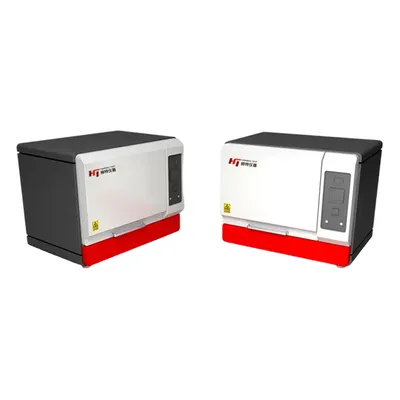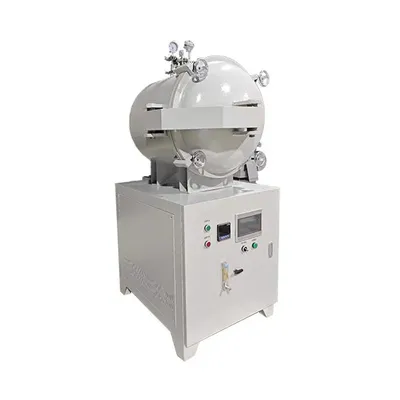
When selecting a high-temperature furnace for materials processing, research, or quality control, two common configurations dominate the landscape: the muffle furnace and the tube furnace. While both serve to heat samples under controlled conditions, their design principles, operational capabilities, and ideal use cases differ significantly. Choosing the wrong type can compromise experimental results, reduce efficiency, or even damage your samples. This article provides a rigorous, side-by-side comparison of muffle furnaces versus tube furnaces, drawing on decades of engineering expertise from Heatest Instrument to help you make an informed procurement decision.
Understanding the Basics: Muffle Furnace and Tube Furnace Defined
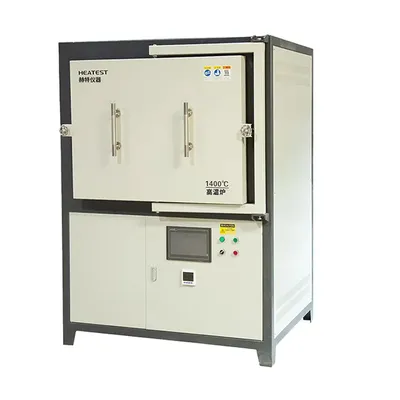
Muffle Furnace: Design and Working Principle
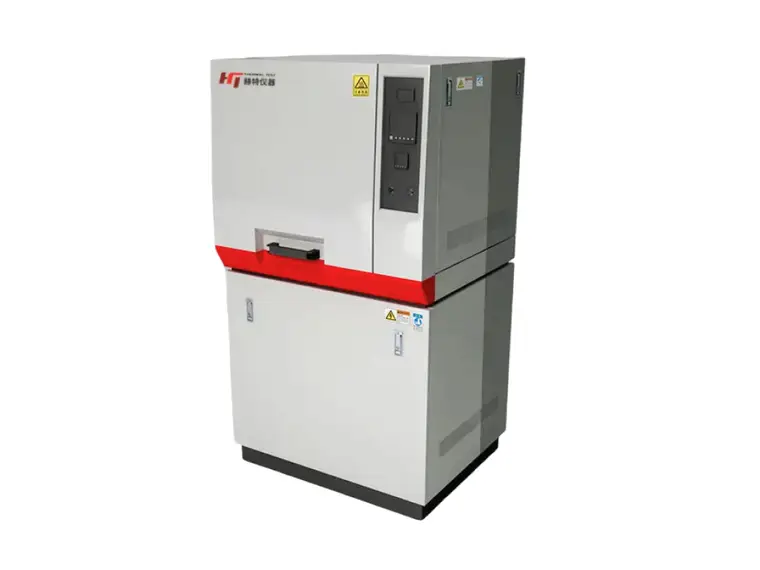
A muffle furnace features a rectangular or cylindrical heating chamber that is completely enclosed by insulating materials and heating elements. The term "muffle" historically refers to a refractory box that isolates the sample from combustion gases. In modern electric muffle furnaces, the heating elements (typically silicon carbide, molybdenum disilicide, or Kanthal wires) are embedded in the chamber walls, heating the cavity uniformly. The sample sits directly on a hearth plate or in a crucible inside the chamber. Air atmosphere is standard, but controlled atmospheres (nitrogen, argon) can be introduced through gas ports on advanced models. Temperature ranges commonly span from 800°C to 1800°C, depending on the heating element type.
Tube Furnace: Design and Working Principle
A tube furnace consists of a cylindrical heating element wrapped around a horizontal or vertical process tube (usually made of quartz, alumina, or stainless steel). The sample is placed inside the tube, often in a boat or crucible. The heating zone is localized along a specific section of the tube, providing a precise thermal profile. The major advantage of a tube furnace is the ability to maintain a controlled atmosphere or vacuum inside the tube, as the ends can be sealed with flanges and gas inlet/outlet connections. Tube furnaces are commonly used for processes requiring inert, reducing, or reactive gas environments. Maximum temperatures typically range from 1000°C to 1700°C, with some specialized models reaching 2000°C.
Key Differences Between Muffle Furnace and Tube Furnace
The following table summarizes the critical distinctions that influence your selection:
- Atmosphere control: Muffle furnaces offer limited atmosphere control; they are primarily designed for ambient air, though some can be purged with inert gas. Tube furnaces excel in atmosphere control, supporting vacuum, inert gas, reducing gas, or even mixed gas environments with excellent sealing.
- Sample loading and geometry: Muffle furnaces accommodate larger, irregularly shaped samples placed directly on the hearth or in crucibles. Tube furnaces restrict sample size to the tube diameter (typically 20–150 mm), but allow for continuous gas flow and easy insertion/removal using push rods.
- Temperature uniformity: Muffle furnaces typically provide more uniform temperature across the entire chamber due to multi-sided heating. Tube furnaces have a defined hot zone; temperature uniformity depends on tube length, insulation, and heating element design. Heatest Instrument’s tube furnaces use three-zone heating to achieve ≤±2°C uniformity over 200 mm.
- Heating and cooling rates: Muffle furnaces generally heat and cool slower due to the large thermal mass of the chamber. Tube furnaces can ramp faster because the tube has lower thermal mass, though rates are limited by tube material thermal shock resistance.
- Applications: Muffle furnaces are ideal for ashing, calcination, heat treatment of metals, glass melting, and incineration. Tube furnaces are preferred for chemical vapor deposition (CVD), sintering under controlled atmosphere, annealing in hydrogen, crystal growth, and catalytic reactions.
Application Scenarios: Which Furnace Suits Your Workflow?
When to Choose a Muffle Furnace
If your primary processes involve sample combustion, weight loss analysis (like loss on ignition), or heat treatment in an ambient air environment, a muffle furnace is the logical and cost-effective choice. For example, laboratories performing ash content determination in coal or food products rely on muffle furnaces because the open chamber allows easy loading of multiple crucibles and quick access. Similarly, metal hardening and tempering in air atmosphere are straightforward with a muffle furnace. Another scenario: when you need to heat large or bulky samples that cannot fit into a narrow tube, the top-opening or front-opening muffle furnace provides unrestricted access.
When to Choose a Tube Furnace
Choose a tube furnace when your experiment demands a precise gas environment or vacuum. Typical use cases include annealing silicon wafers in a nitrogen/hydrogen mixture, sintering ceramic powders in argon, or growing carbon nanotubes via CVD. The tube furnace’s sealed system allows you to purge oxygen, maintain a positive pressure, or connect to a vacuum pump. Additionally, processes requiring fast thermal cycling or a long uniform hot zone (for example, multiple samples in a single run) benefit from the tube furnace’s design. Heatest Instrument’s tube furnaces are available with programmable gas flow controllers and vacuum ratings down to 10⁻³ Torr, enabling advanced materials research.
Decision Matrix: Evaluating Your Requirements
Before finalizing your purchase, consider the following decision framework. Use this checklist to map your needs to the furnace type:
- Atmosphere requirement: Do you need inert gas, vacuum, or reactive gas? If yes → tube furnace. If ambient air is sufficient → muffle furnace.
- Sample size and geometry: Is your sample larger than 150 mm in any dimension? If yes → muffle furnace. Otherwise, consider tube furnace for better atmosphere control.
- Temperature range: Both can cover common ranges, but for above 1600°C, tube furnaces with molybdenum disilicide elements are more common, while muffle furnaces may use graphite or zirconia heaters (special order). Check Heatest Instrument’s catalog for each series.
- Throughput: How many samples per run? Muffle furnaces can accommodate dozens of crucibles simultaneously. Tube furnaces typically process one tube load at a time (though multiple boats can be placed in series).
- Budget: Muffle furnaces are generally less expensive for a given chamber volume and temperature rating. Tube furnaces require additional gas/vacuum systems, raising the total cost.
By systematically answering these questions, you can eliminate mismatches and narrow down to the furnace design that aligns with your operational needs.
Why Heatest Instrument’s Furnaces Stand Out
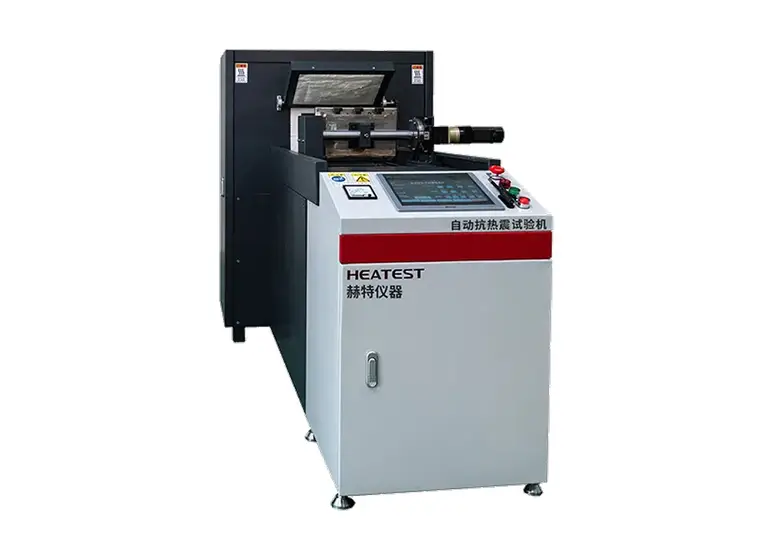
Heatest Instrument has been engineering thermal solutions for over a decade, serving research institutes, industrial laboratories, and manufacturing facilities worldwide. Our muffle furnace series incorporate advanced insulation materials that reduce energy consumption by up to 20% compared to conventional designs, while maintaining ±1°C temperature uniformity across the chamber. For tube furnaces, we offer modular tube segments with quick-connect flanges, enabling easy swapping of tube materials (quartz, alumina, Inconel) to suit different chemical environments. Each furnace undergoes rigorous calibration and comes with a multi-segment programmable controller for precise ramp/soak profiles. Additionally, our technical support team provides free application consultation—simply send us your process requirements, and we will recommend the optimal configuration.
Frequently Asked Questions (FAQ)
Can a muffle furnace be used for controlled atmosphere processes?
Standard muffle furnaces are not designed for tight atmosphere control. However, some models like Heatest Instrument’s AO series include a removable muffle chamber with gas inlet and outlet ports, allowing a continuous flow of inert gas. This is suitable for processes that require a non-reactive environment but do not demand high purity or vacuum. For rigorous atmosphere control (e.g., hydrogen annealing), a tube furnace is still the preferred choice.
Which furnace type is more energy efficient?
Energy efficiency depends on the operating temperature and duty cycle. For intermittent use, a tube furnace’s lower thermal mass allows faster heating and cooling, potentially saving energy over short runs. For continuous, long-duration processes, a well-insulated muffle furnace may have lower steady-state heat loss. Heatest Instrument offers energy consumption data for each model to help you calculate total cost of ownership.
Can I use a tube furnace for ashing samples?
Yes, but it is not optimal. Ashing typically requires large volumes of sample in open crucibles and a high flow of air to oxidize organic matter. A muffle furnace with a forced air circulation option is more efficient. Using a tube furnace for ashing would restrict sample size and complicate air supply, though it is possible for small quantities.
Making the Right Choice
Ultimately, the decision between a muffle furnace and a tube furnace hinges on your specific application requirements—particularly atmosphere control, sample size, and process temperature. By evaluating these factors against the design strengths of each furnace type, you can allocate your budget effectively and achieve reliable, reproducible thermal processing. For personalized guidance, contact Heatest Instrument’s engineering team; we will help you select the exact furnace that matches your workflow, backed by comprehensive warranty and after-sales support.