STEP 1
Pulse Excitation Method
Utilizes the pulse excitation method for dynamic non-destructive testing, allowing for accurate detection of the elastic modulus in various solid materials without causing damage.
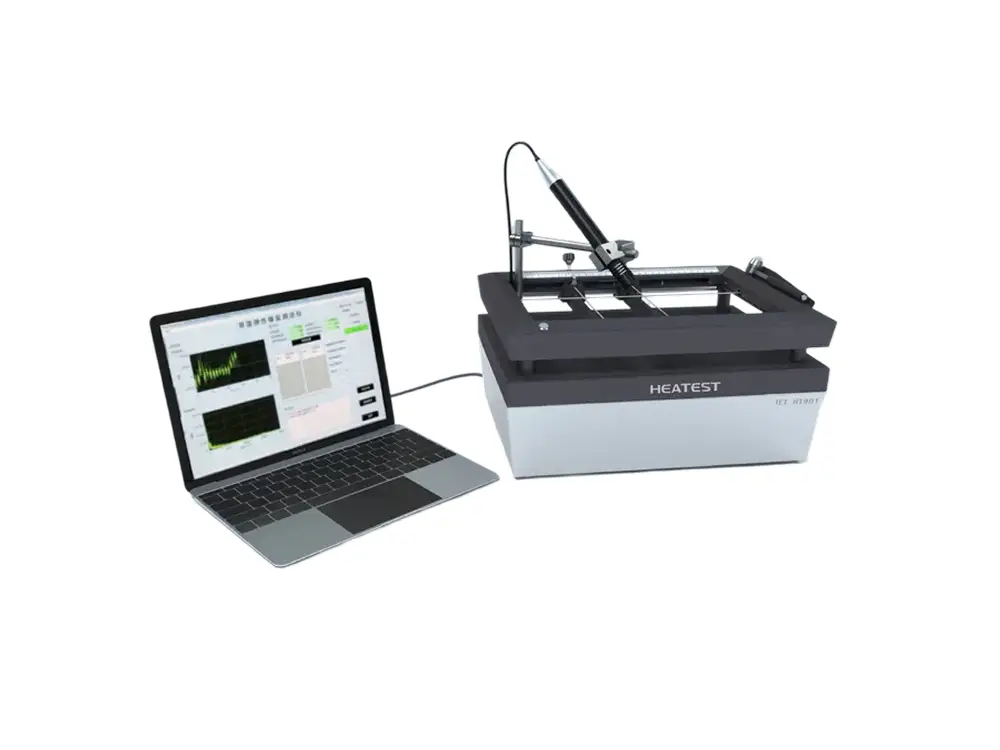
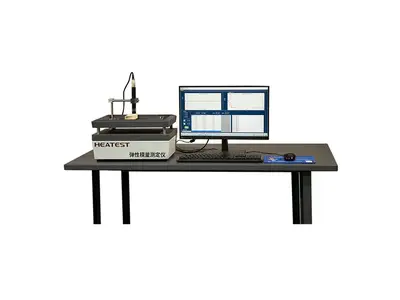
The elastic modulus tester is a high-precision instrument designed for the dynamic non-destructive testing of solid materials' elastic properties. It is capable of measuring Young's modulus, shear modulus, and Poisson's ratio for materials such as metals, ceramics, glass, graphite, and refractory materials.
The elastic modulus tester utilizes the pulse excitation method for dynamic non-destructive testing, providing accurate detection of the elastic modulus of various solid materials. This method is essential for assessing the mechanical properties of materials, which is crucial for quality control in manufacturing and research. The tester covers a wide range of materials, including metals, ceramics, glass, graphite, and refractory materials, making it a versatile tool for material scientists and engineers.
Our elastic modulus tester is compliant with international standards such as GB/T 22315-2008, ASTM E1876-01 (2009), and GB/T 30758-2014, ensuring that the measurements are standardized and recognized globally. This compliance is vital for industries where material properties.
What sets our elastic modulus tester apart is its high measurement accuracy and reliable data output. The instrument features a stable knocking mechanism, automatic frequency acquisition, and conversion system, along with measurement and control software based on the Windows platform. This software enables intelligent data processing and mathematical model fitting, providing a clear resonant frequency spectrum and the ability to read any peak frequency and elastic modulus.