STEP 1
Large Furnace Structure for Simultaneous Testing
The High Temperature Air Permeability Tester is designed with a large furnace structure that can handle four samples at once, streamlining your testing process and increasing throughput.
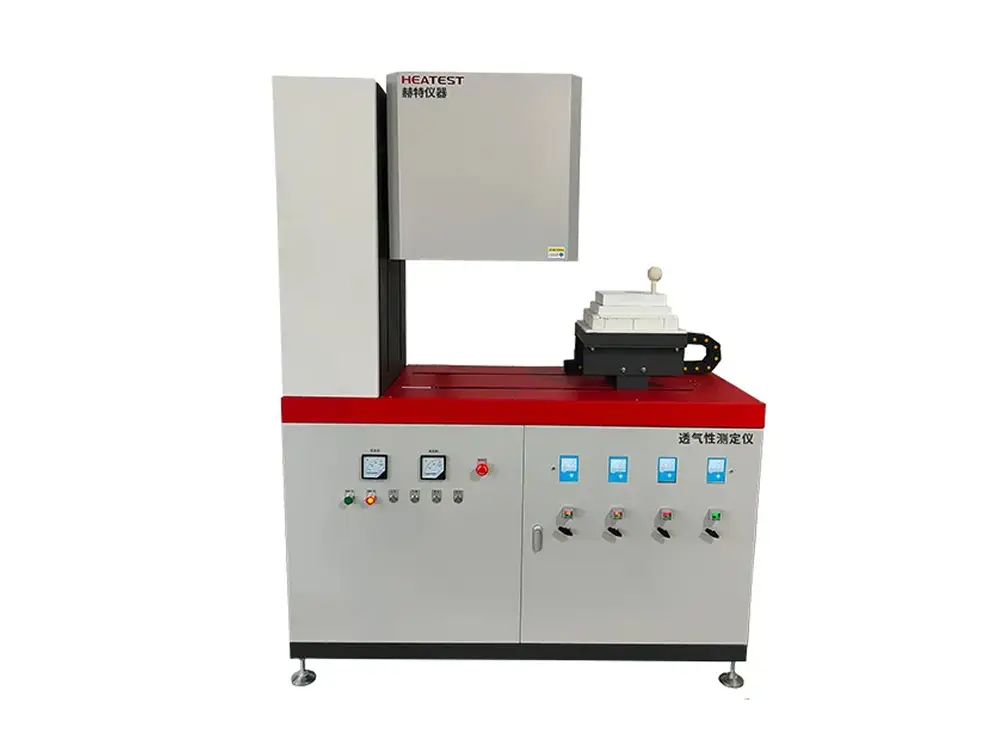
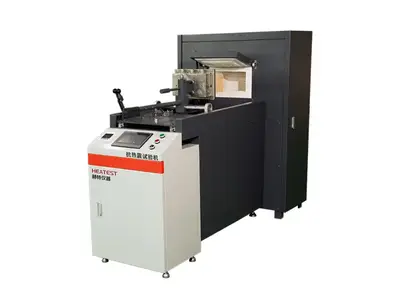
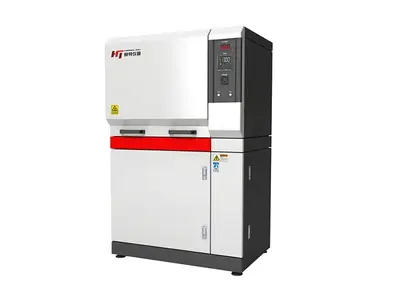
Our high temperature air permeability tester is engineered to assess the permeability of investment casting shells, particularly those made of aluminum-magnesium-titanium alloys. With a robust furnace structure and a custom corundum ventilation pipe, this tester ensures reliable results even with large and heavy samples. The intelligent temperature control module and PLC system provide precise measurements and data processing, making it a valuable asset in high-temperature material testing.
The high temperature air permeability tester is specifically designed for testing the permeability of investment casting shells, accommodating large and heavy aluminum-magnesium-titanium alloy shells. The large furnace structure allows for simultaneous heating tests of up to four samples, ensuring efficiency in your testing processes. The custom corundum ventilation pipe is engineered to withstand high temperatures without bending, ensuring that the sample's mass does not compromise the integrity of the test results.
This tester is equipped with an intelligent temperature control module for precise temperature measurement and control, a PLC system for movement control, and software for data collection and processing. The tester also features a digital gas flowmeter for real-time monitoring and automatic data recording, offering a fast collection response, strong anti-interference capabilities, and a low failure rate.
Our high temperature air permeability tester complies with test standards such as HB5352.4-2004 and JB/T4153, making it a reliable choice for quality assurance in the investment casting industry. The tester's principle involves heating the sample to the test temperature, maintaining a specified temperature distribution, and recording gas flow data through the sample at a constant pressure, resulting in a 'flow-time-temperature' curve.