High-temperature-melting-characteristics-tester

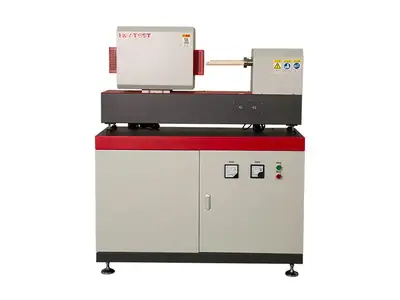
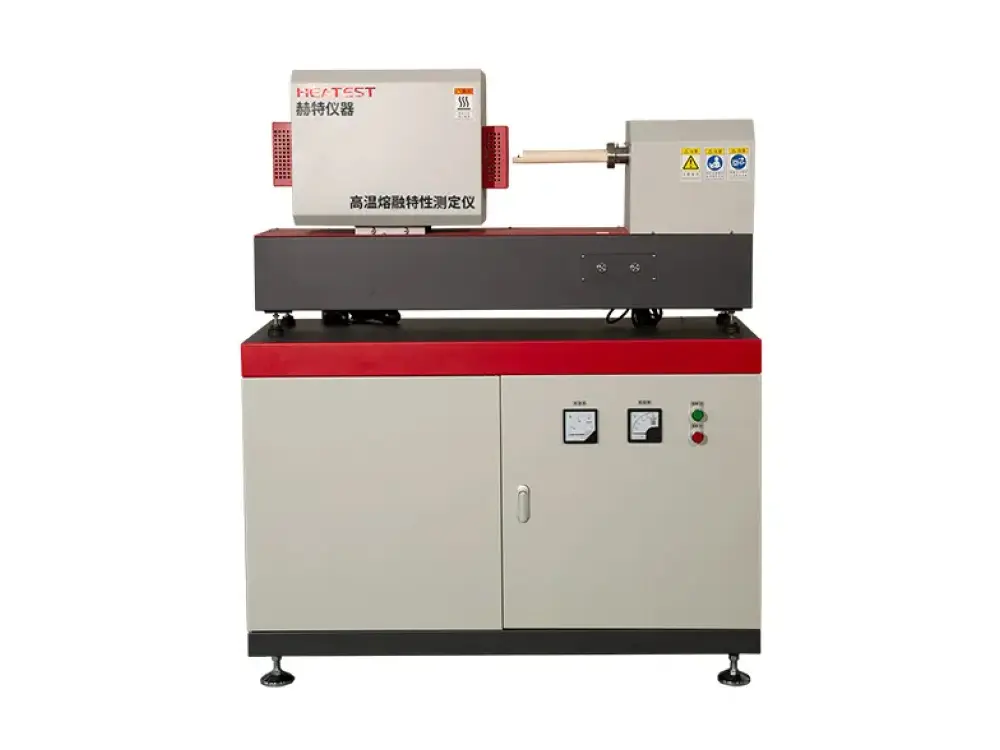
High Temperature Melting Characteristics Tester

Advanced Material Analysis for High-Temperature Applications

The high temperature melting characteristics tester is a state-of-the-art instrument designed to analyze the transformation of materials under high-temperature conditions. It is equipped with non-contact technology and image analysis capabilities, making it ideal for industries dealing with ceramics, glazes, metals, solders, alloys, glass, coal, and more.

Temperature Measurement
B-type Thermocouple
Temperature Control
High-Precision Module

Why High-Temperature Melting Characteristics Matter

The high temperature melting characteristics tester is a sophisticated piece of equipment that replicates the industrial firing treatment environment to analyze the high-temperature behavior of various materials. It measures critical parameters such as the softening temperature, melting point temperature, melting rate, fusion temperature, flow temperature, contact angle, expansion effect, surface tension, and theoretical viscosity. This detailed analysis is vital for optimizing material production processes.

The tester employs GM1800 high-temperature silicon-molybdenum rod as the heating element, coupled with B-type thermocouple temperature measurement and a high-precision temperature control module. This ensures accurate heating rates and reliable data collection. The industrial image acquisition system captures real-time images, which are displayed on a computer monitor, allowing for digital imaging and automatic recognition, thereby eliminating human error.

One of the key advantages of this tester is its ability to collect and analyze data from three samples simultaneously in a single test. This feature significantly enhances productivity and efficiency in material testing and development.

  • Non-contact technology for accurate sample analysis without physical interference.
  • High-precision temperature control for consistent and reliable results.
  • Simultaneous multi-sample testing for increased efficiency.

Key Technical Features and Benefits

STEP 1

Non-Contact Sample Analysis

The tester uses non-contact technology to measure and record the sintering shrinkage rate of materials, analyzing size changes such as height, width, and area without physical contact, ensuring accuracy and sample integrity.
STEP 2

Real-Time Deformation Measurement

Capable of real-time measurement of deformation in both regular and irregular shaped samples during the sintering process, providing即时 data on material behavior under high temperatures.

STEP 3

Determination of Characteristic Temperatures

The tester can determine key temperatures such as sintering point, softening point, melting temperature, hemispherical temperature, and flow temperature, which are critical for material quality control and process optimization.

STEP 4

High-Temperature Deformation Analysis

Designed to analyze the high-temperature deformation of core materials, providing insights into the material's behavior under extreme conditions, essential for applications in high-temperature industries.

FAQs about High Temperature Melting Characteristics Tester

Similar Models