
When developing materials that must withstand elevated temperatures, engineers and quality managers rely on high temperature test chambers to simulate extreme thermal environments. These chambers, also known as thermal test ovens or environmental test chambers, are critical for evaluating the structural integrity, dimensional stability, and performance degradation of metals, polymers, ceramics, composites, and coatings under controlled heat stress. Selecting the right equipment directly impacts the accuracy of test results and product reliability. This guide explores the working principles, essential performance parameters, and practical selection criteria for material heat resistance tests, with a focus on the high-quality solutions offered by HEATEST Instrument.
Understanding High Temperature Test Chambers for Material Heat Resistance
A high temperature test chamber creates a precisely controlled hot environment to assess how materials behave when exposed to sustained or cyclic heat. The chamber's heating system—typically using resistance heaters or infrared lamps—raises the internal air temperature to a set point, while a PID controller maintains stability within tight tolerances. A fan circulates hot air to ensure uniform temperature distribution across the test samples. For material heat resistance tests, the chamber must reach temperatures commonly ranging from 200°C to over 1200°C, depending on the material type and industry standard (e.g., ISO 188, ASTM D573, MIL-STD-810).
Key Applications in Material Testing
- Thermal aging tests for polymers and elastomers to predict service life
- Heat deflection temperature (HDT) measurement for thermoplastics
- Thermal cycling for electronic components and solder joints
- Fire resistance screening for building materials and insulation
- Oxidation resistance evaluation for metals and alloys at high temperatures
Critical Performance Parameters to Evaluate
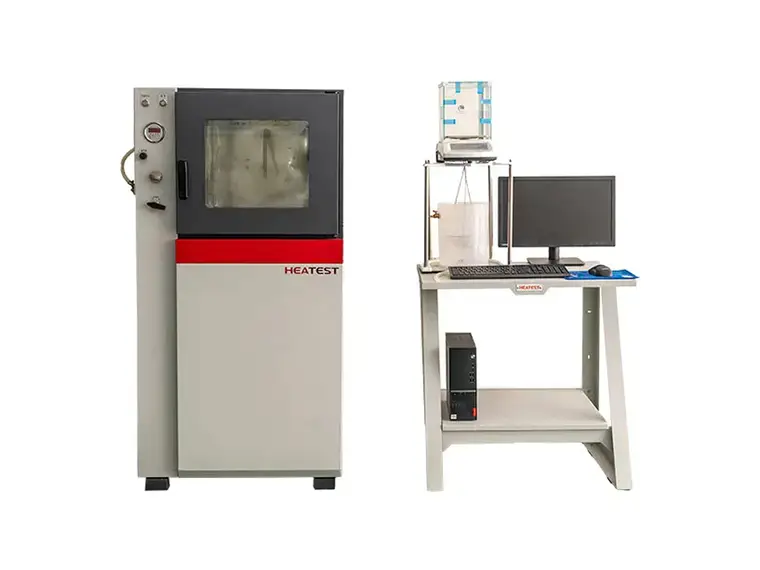
Not all high temperature chambers deliver the same performance. When specifying equipment for material heat resistance tests, consider these parameters:
Temperature Range and Accuracy
The chamber must cover the required test temperatures with a margin of safety. For example, a chamber rated for 300°C is insufficient if your material needs testing at 350°C. Accuracy (typically ±0.5°C to ±2°C) and stability over time affect the repeatability of results.
Temperature Uniformity
Uneven heating can create hot spots that skew test outcomes. A high-quality chamber maintains uniformity within ±1°C to ±3°C across the entire working volume. HEATEST Instrument chambers use advanced air duct design and multi-zone heating to achieve superior uniformity even under heavy sample loading.
Heating and Cooling Rates
For thermal cycling tests, the ramp rate matters. Many industrial chambers offer heating rates of 3°C to 10°C per minute. Some applications require faster rates for simulating thermal shock—verify if you need a dedicated thermal shock chamber instead.
Chamber Volume and Sample Capacity
Choose a volume that accommodates your test specimens without overcrowding. A general rule: leave at least 10–20% free space around samples to allow air circulation. Standard volumes range from 50L to over 1000L.
How to Select the Right Chamber: A Comparison of Key Features
To help you make an informed decision, the following table compares typical offering tiers. Premium chambers from HEATEST Instrument combine all high-end features without compromising reliability.
| Feature | Basic / Economy | Mid-Range | HEATEST Instrument (Premium) |
|---|---|---|---|
| Temperature uniformity | ±3°C | ±2°C | ±1°C |
| Heating rate | 2°C/min | 5°C/min | 10°C/min or customizable |
| Controller type | Simple digital PID | Touchscreen programmable | Color HMI with multi-step profiling & remote access |
| Safety features | Over-temperature limit | Over-temp + door interlock | Over-temp, interlock, power failure protection, independent safety thermostat |
| Data logging | None or basic RS232 | USB / Ethernet with software | Built-in data recorder, cloud connectivity, compliance with 21 CFR Part 11 (optional) |
| Warranty / support | 1 year | 2 years | 3 years + extended calibration services |
When comparing cost versus performance, consider the total cost of ownership—including calibration, energy consumption, and maintenance. HEATEST Instrument chambers are engineered for long-term stability, reducing downtime and recalibration frequency.
Why Choose HEATEST Instrument for Your Material Heat Resistance Testing
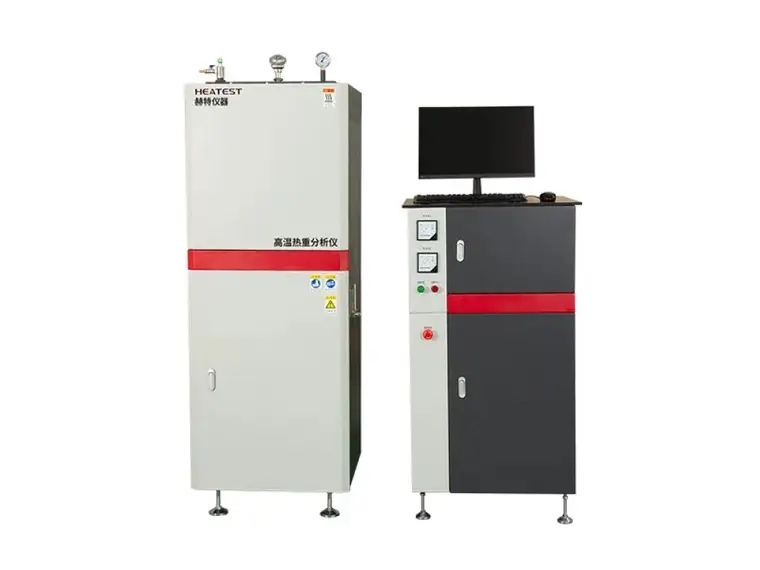
HEATEST Instrument has specialized in laboratory thermal testing equipment for over a decade. Their high temperature chambers are built with corrosion-resistant stainless steel interiors, heavy-duty heating elements, and redundant safety systems. Each unit undergoes a 72-hour burn-in test before shipping to verify performance at the extremes. Customers in automotive, aerospace, electronics, and packaging industries trust HEATEST for:
- Customizable sizes and temperature ranges up to 1200°C
- Modular design that allows retrofitting with viewing windows, gas ports, or vacuum capabilities
- Global compliance with IEC, UL/CSA, CE, and other regional standards
- Dedicated technical support for troubleshooting and calibration
Frequently Asked Questions About High Temperature Test Chambers
- What is the difference between an oven and a test chamber? A standard oven heats air; a test chamber adds precise control, uniformity, and often forced air circulation for reproducible material testing.
- Can I use the same chamber for both heat resistance and thermal shock testing? Only if the chamber can perform rapid temperature transitions. Purpose-built thermal shock chambers with two zones are recommended for extreme gradients.
- How often should a high temperature chamber be calibrated? Typically every 6–12 months, or after any major repair. HEATEST offers on-site calibration services.
- What is the typical lifespan of a HEATEST high temperature chamber? With proper maintenance, 10–15 years of reliable operation is common.
Conclusion
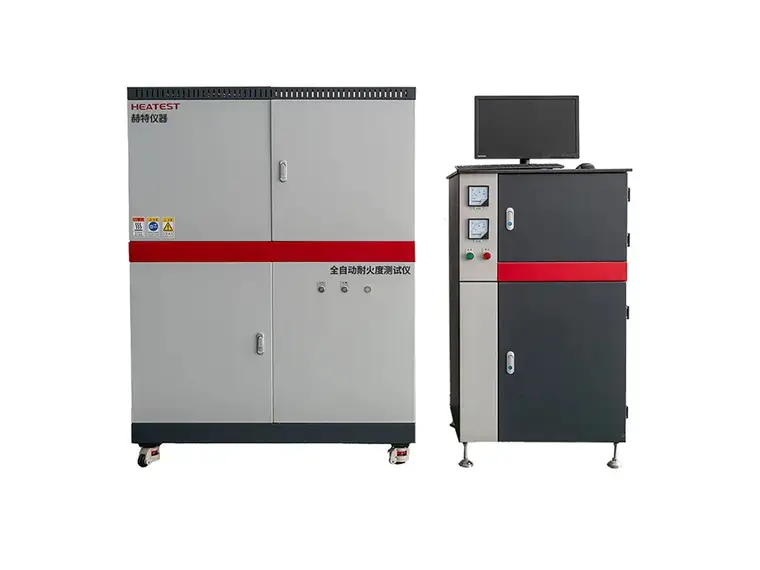
Selecting the appropriate high temperature test chamber for material heat resistance tests requires a clear understanding of your test standards, sample characteristics, and required data quality. Prioritize chambers with excellent uniformity, stable control, and robust safety features. HEATEST Instrument delivers professional-grade chambers that meet the rigorous demands of modern material testing laboratories. Contact their team for a tailored recommendation that aligns with your specific test protocols.