
When evaluating the fire safety of construction materials, aerospace composites, or electrical insulation, precise high-temperature testing is non-negotiable. The ability to simulate extreme thermal conditions and measure a material's response—ignition time, flame spread, heat release, and structural integrity under direct fire exposure—directly impacts certification, building code compliance, and product liability. For engineers and quality managers, selecting the right high temp test equipment for fire resistance testing of materials requires a deep understanding of test standards, temperature uniformity, data acquisition accuracy, and long-term reliability. This article provides a technical overview of the critical factors and showcases how HEATEST Instrument’s equipment meets the rigorous demands of modern fire testing laboratories.
Understanding High Temperature Test Equipment for Fire Resistance
High temperature test equipment for fire resistance testing encompasses furnaces, radiant panels, cone calorimeters, and vertical/horizontal flame chambers designed to expose materials to controlled thermal environments—often exceeding 1000°C. The primary objective is to replicate real-fire scenarios while measuring parameters such as heat flux, mass loss, smoke density, and time to ignition.
Core Types of Fire Resistance Testing Equipment
- Furnace Systems: Used for wall, floor, and column assemblies per ASTM E119, ISO 834, or EN 1363. These units must maintain precise temperature curves (e.g., standard time-temperature curve) with deviation under ±10°C.
- Cone Calorimeters: Based on ISO 5660, they measure heat release rate (HRR) via oxygen consumption calorimetry, critical for assessing flammability of upholstery, plastics, and building finishes.
- Radiant Panel Systems: For floor coverings (ASTM E648) and textiles, these apply a controlled radiant heat flux to determine critical radiant flux (CRF).
- Vertical/Horizontal Flame Chambers: UL 94, IEC 60695, and ASTM D3801 classify materials as V-0, V-1, etc., based on flame propagation after exposure to a defined flame source.
Critical Performance Requirements for Reliable Test Results
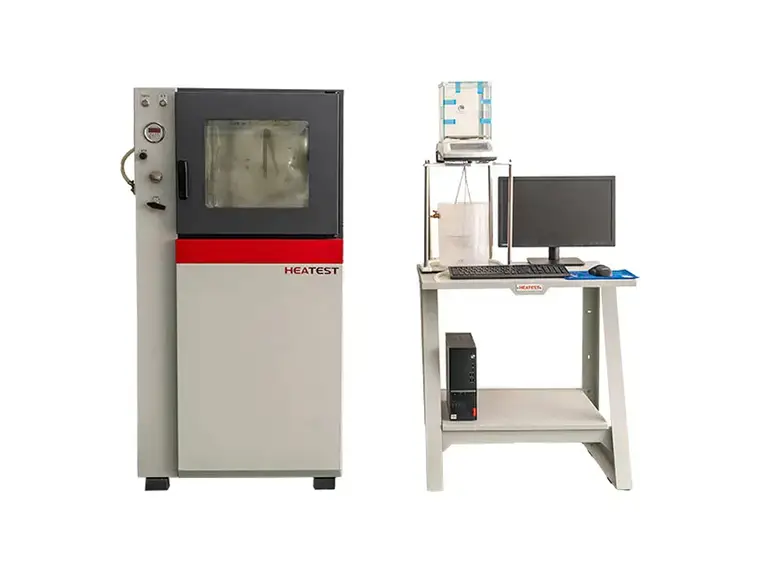
Accuracy, repeatability, and durability are non-negotiable in fire testing. The following parameters must be carefully evaluated when specifying high temp test equipment:
Temperature Uniformity and Ramp Rate
ISO & ASTM standards mandate that furnace temperatures across specified measurement points differ by no more than a defined tolerance (e.g., ±10°C at 1000°C). A poorly insulated or unevenly heated chamber leads to invalid test results and wasted test cycles. HEATEST Instrument manufactures furnaces with multi-zone PID control and helically wound heating elements to achieve class-leading uniformity.
Data Acquisition and Control System
Modern high temp test equipment integrates thermocouples (type K, N, or B), pressure transducers, and digital mass flow controllers connected to a robust PLC. The software must log every second of the temperature ramp, maintain automatic shut-off at failure, and generate test reports that comply with certification bodies.
Material Compatibility and Refractory Life
Fire test furnaces use high-alumina refractory bricks or ceramic fiber insulation. The choice impacts both maximum safe temperature and thermal shock resistance. Equipment from HEATEST Instrument employs vacuum-formed ceramic fiber modules that withstand 1500°C while reducing energy consumption by up to 20% compared to traditional dense brick designs.
Why HEATEST Instrument Stands Out for Fire Resistance Testing
After years of supplying fire testing laboratories worldwide, HEATEST Instrument has refined its product line to address common pain points: calibration traceability, easy specimen mounting, and compliance with evolving international standards. Below is a direct comparison of key advantages:
| Feature | Typical Industry Equipment | HEATEST Instrument |
|---|---|---|
| Temperature Control Accuracy | ±15°C at 1000°C | ±5°C (with multi-zone PID + adaptive tuning) |
| Heating Element Life | MoSi2 rods, 2–3 years typical | Patented MoSi2/SiC hybrid – 5+ years under normal duty |
| Software Reporting | Basic CSV export | Full ASTM/ISO compliant report generation with graph overlay (PDF/Excel) |
| Safety Interlocks | Optional | Standard: overtemperature, door open, gas leak & overpressure shutdown |
| Customization | Limited | Engineer-to-order for non-standard specimen sizes (e.g., 1m x 1m panels) |
Industry Standards and Certification Compliance
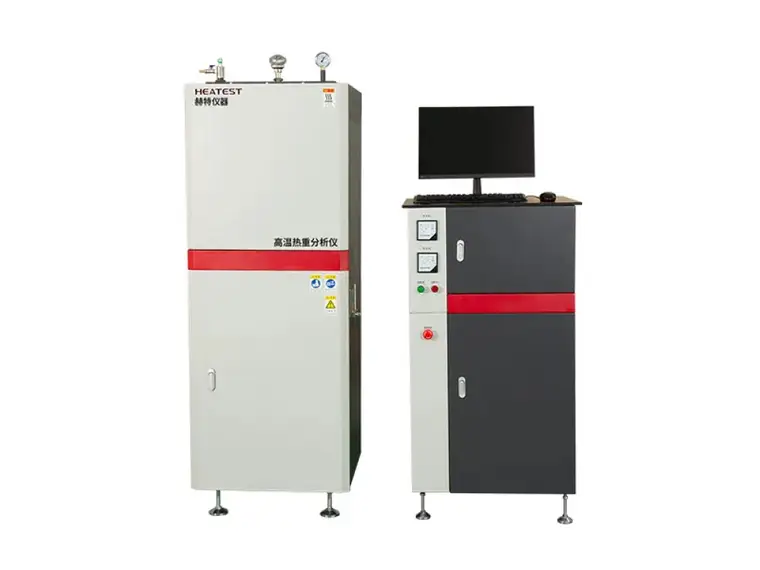
Your laboratory’s credibility depends on testing equipment that meets the exact specifications of international standards. HEATEST Instrument fire resistance testers are designed to comply with (and often exceed) the requirements of:
- ASTM E119 (Fire Tests of Building Construction and Materials)
- ISO 834 (Fire-resistance tests – Elements of building construction)
- EN 1363 (Fire resistance tests – General requirements)
- BS 476 (Fire tests on building materials and structures)
- UL 263 (Fire Tests of Building Construction and Materials)
- NFPA 251 (Standard Methods of Tests of Fire Endurance of Building Construction and Materials)
- ISO 5660 (Reaction-to-fire tests – Heat release, smoke production and mass loss rate – Cone calorimeter method)
Each unit ships with a certificate of calibration traceable to national metrology institutes, and HEATEST Instrument offers on-site qualification support for accreditation audits (ISO 17025, UKAS, or similar).
Conclusion: Investing in Accurate Fire Resistance Testing
Fire resistance testing is not simply a regulatory checkbox—it is a fundamental part of protecting lives and property. The high temp test equipment you choose will directly affect your ability to pass certification, reduce false passes/fails, and build trust with clients. HEATEST Instrument has established a reputation for delivering robust, precise, and standards-compliant systems that minimize downtime and maximize laboratory productivity. Whether you need a standard cone calorimeter or a multi-zone furnace for large-scale assemblies, our team can configure a solution that meets your budget and timeline. Contact us to review your specific test requirements and discover how our fire resistance testing equipment can elevate your material evaluation capabilities.