
When developing components for aerospace applications, verifying performance under extreme thermal conditions is non-negotiable. High temperature test equipment simulates the intense heat environments that aircraft engines, spacecraft structures, and avionics endure during operation. Selecting the right chamber directly impacts validation accuracy, program timelines, and certification success. This article outlines what aerospace engineers and procurement specialists need to know about high temperature testing, from core technical parameters to critical selection criteria, with insights from HEATEST Instrument—a manufacturer recognized for reliability in demanding thermal testing.
Why Aerospace Demands Specialized High Temperature Testing
Aerospace systems face unique thermal challenges: supersonic flight generates friction heating exceeding 1000°C; re-entry vehicles experience plasma temperatures above 2000°C; and rocket nozzles must withstand sustained combustion heat. Standard industrial ovens cannot replicate these conditions with the uniformity, ramp rates, and control precision required by aerospace standards such as MIL-STD-810, RTCA DO-160, and NASA-STD-6016. High temperature test equipment designed for aerospace must deliver:
- Wide temperature range – typically -70°C to +1800°C or higher, covering both cold soak and extreme heat profiles.
- High ramp rates – up to 50°C/min to simulate rapid thermal transitions during flight maneuvers.
- Superior uniformity – ±2°C or better across the working volume to ensure repeatable test results.
- Vacuum or inert gas capability – for testing materials that oxidize at high temperatures in ambient air.
Without purpose-built chambers, engineers risk underestimating material degradation, thermal expansion effects, or electronic failure modes, leading to in-flight failures—an unacceptable outcome in aerospace.
Key Technical Parameters in Aerospace High Temperature Chambers
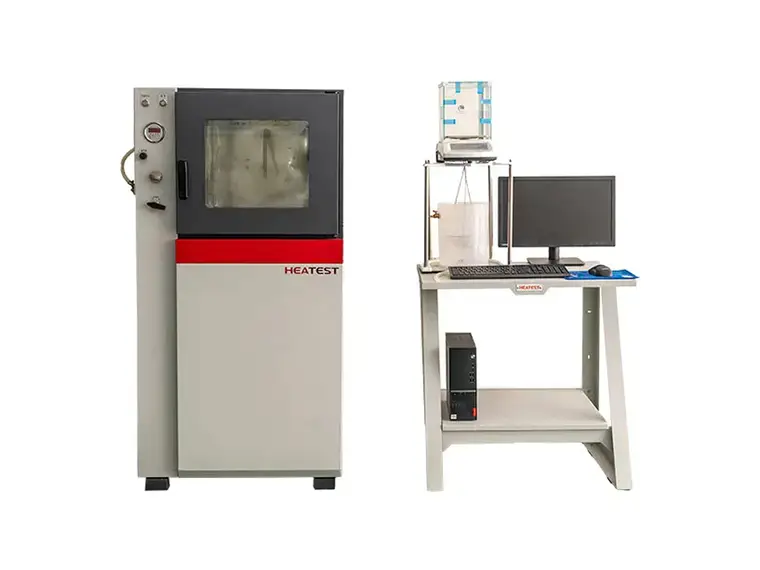
Understanding the specifications that matter helps narrow down equipment choices. Below are the critical parameters to evaluate when reviewing proposals from manufacturers like HEATEST Instrument.
Temperature Range and Heating Elements
Most aerospace testing requires chambers that reach at least +300°C for general avionics, while engine components demand +1200°C to +1600°C. HEATEST Instrument offers models with molybdenum disilicide heating elements capable of sustained operation at 1600°C, ensuring accurate simulation of turbine blade environments. For ultra-high temperature applications (above 1800°C), graphite or tungsten element chambers are available.
Control Accuracy and Data Acquisition
Aerospace test protocols often mandate temperature stability of ±1°C throughout the soak period and data logging at 1-second intervals. Look for chambers with PID + fuzzy logic controllers and multi-zone heating to minimize overshoot. HEATEST Instrument‘s touch-screen controllers provide 16-channel data recording, compliant with 21 CFR Part 11 for traceability in certification audits.
Chamber Dimensions and Load Capacity
Test article size varies widely—from small electronic boards to full-scale fuselage sections. Ensure internal dimensions accommodate your largest component with at least 20% clearance for airflow. HEATEST Instrument manufactures custom sizes with reinforced shelving capable of supporting heavy metal specimens.
Selecting the Right Equipment: A Decision Framework
Rather than comparing dozens of brands solely by price, use this structured approach to match equipment to your program requirements. The table below summarizes key comparison points across three typical aerospace testing scenarios.
- Material qualification – requires wide temperature range, vacuum option, and thermal cycling capability. Prioritize chambers with quartz window ports for visual inspection.
- Component endurance – needs consistent long-term stability (hundreds of hours) and remote monitoring. Look for systems with redundant safety interlocks.
- Production batch testing – demands fast throughput, easy loading/unloading, and multi-zone uniformity. Consider walk-in chambers with automated door sealing.
Advantages of HEATEST Instrument vs. Generic Chambers
When evaluating suppliers, HEATEST Instrument differentiates through four key attributes:
- Aerospace-grade construction: all chambers meet AS9100D quality management standards, with stainless steel interiors and ceramic fiber insulation rated for 1600°C continuous use.
- Rapid thermal shock capability: optional dual-chamber designs allow transfer between hot and cold zones in under 5 seconds for thermal shock testing per MIL-STD-883.
- Low ownership cost: energy-efficient heaters and modular design reduce electricity consumption by up to 30% compared to conventional models, with field-replaceable heating elements minimizing downtime.
- Comprehensive validation support: each chamber ships with NIST-traceable calibration certificates, IQ/OQ documentation, and software that directly exports data to popular aerospace analysis tools.
Frequently Asked Questions About High Temperature Test Equipment for Aerospace
Q: Can a standard industrial oven be used for aerospace testing?
A: Not recommended. Standard ovens lack the uniformity, ramp rate control, and safety certifications required by aerospace standards. Using them risks invalid test results and failed audits.
Q: What maintenance is required for high temperature chambers?
A: Periodic calibration of thermocouples (every 6–12 months), inspection of door seals, and replacement of heating elements after 2000–3000 operating hours. HEATEST Instrument offers preventive maintenance contracts including remote diagnostics.
Q: How long does it take to get a custom chamber delivered?
A: Typical lead time for custom aerospace chambers is 12–16 weeks. HEATEST Instrument stocks standard sizes for immediate delivery and expedites custom orders through a dedicated aerospace team.
Conclusion: Choosing the Right Partner for Thermal Testing
High temperature test equipment is a long-term investment that directly affects your organization’s ability to certify aerospace components. Prioritize suppliers like HEATEST Instrument that combine deep technical expertise, flexible customization, and adherence to aerospace quality standards. By understanding your specific test profiles—temperature range, ramp rates, chamber size, and data management—you can select a solution that not only meets today’s requirements but scales for future programs. Contact HEATEST Instrument’s aerospace application specialists for a detailed consultation tailored to your thermal testing needs.