
Automotive components must withstand extreme thermal conditions during operation, from engine compartments to exhaust systems. High temperature test chambers provide precisely controlled environments to validate part durability, material stability, and performance under heat stress. For engineers and procurement specialists seeking reliable thermal testing equipment, understanding the technical specifications and selection criteria is essential to ensure compliance with industry standards like ISO 16750, SAE J2521, and OEM-specific requirements. This article examines the critical role of high temp chambers in automotive validation and offers a practical framework for choosing the right system.
Why High Temperature Testing Is Critical for Automotive Components
Modern vehicles incorporate hundreds of components that must function reliably across a wide temperature range. Heat sources include the engine, turbocharger, exhaust manifold, and electronic control units. Without rigorous validation, materials may degrade, seals may fail, or electronic circuits may drift. High temp test chambers replicate these conditions in a controlled laboratory setting, allowing manufacturers to:
- Verify component performance at sustained high temperatures (typically +150°C to +300°C)
- Identify failure modes such as thermal expansion, oxidation, or adhesive breakdown
- Validate thermal cycling resistance for parts exposed to rapid heating and cooling
- Meet regulatory and customer-specific qualification tests
For example, engine gaskets must maintain sealing integrity at 250°C, while ECU housings require thermal stability at 125°C for thousands of hours. A properly specified chamber ensures these tests are repeatable and representative of real-world conditions.
Key Technical Parameters of High Temp Test Chambers
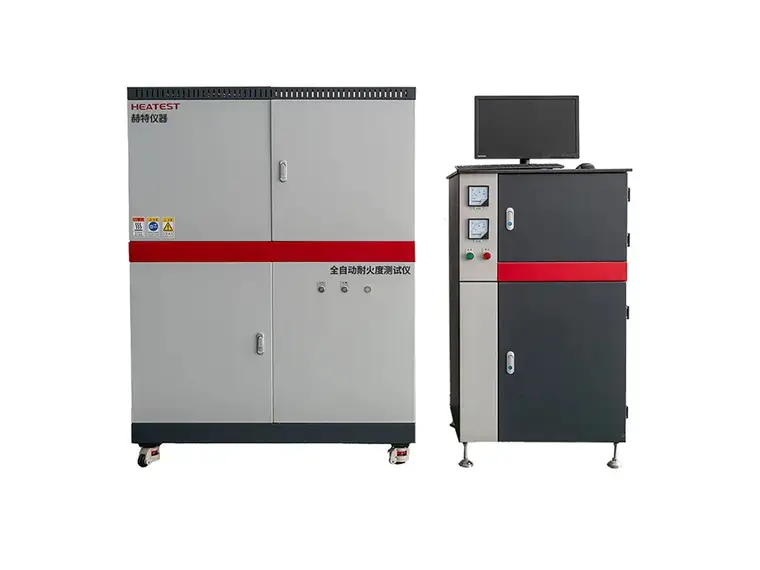
When evaluating chambers for automotive validation, several core specifications determine suitability and cost-effectiveness:
Temperature Range and Stability
The chamber must achieve the maximum required test temperature with adequate margin. Most automotive applications range from ambient to +300°C, though specialized tests may reach +500°C for exhaust components. Temperature stability of ±0.5°C or better is critical for consistent results, especially during long-duration aging tests.
Temperature Uniformity
Variations across the workspace can invalidate test results. Quality chambers maintain uniformity within ±2°C at steady state, and ±3°C during ramp. Airflow design and heater placement are the primary factors affecting uniformity.
Heating and Cooling Rates
Thermal cycling tests require controlled ramp rates. Typical chambers offer 3–15°C/min heating; forced air cooling or optional refrigeration systems can provide cooling rates of 1–5°C/min. Faster rates reduce test cycle time but require more robust construction.
Chamber Size and Loading
Internal dimensions must accommodate the component or assembly under test. Common volumes range from 100 to 1000 liters. Consult the chamber's load capacity and airflow pattern to ensure uniform heating of the test specimen.
How to Choose the Right High Temp Test Chamber
Selection involves aligning test requirements with chamber capabilities while considering total cost of ownership. Below is a comparison of key factors and how HEATEST Instrument addresses them:
| Selection Factor | Importance | HEATEST Advantage |
|---|---|---|
| Maximum temperature | Must exceed test specs | Models up to +350°C standard, +500°C optional |
| Control accuracy | Ensures repeatability | PID + fuzzy logic controllers ±0.3°C stability |
| Safety features | Protect operators and samples | Multi-layer over-temp protection, redundant sensors |
| Data logging & connectivity | Required for audit trails | USB/Ethernet, software for real-time monitoring |
| Compliance with standards | Must pass qualification audits | ISO 16750, JIS D 0203, MIL-STD-810G compliant |
Why HEATEST Instrument Stands Out
- Customizable workspace dimensions – standard shelves can be reconfigured or removed for large assemblies
- Energy-efficient heating elements – ceramic infrared or forced convection reduces power consumption by up to 20% compared to conventional designs
- Intuitive touchscreen interface – pre-programmed test profiles for common automotive standards minimize setup time
- Global support network – calibration services and spare parts available in 40+ countries
Frequently Asked Questions
What is the typical lifespan of a high temp test chamber?
With regular maintenance and proper operation, a well-built chamber from HEATEST Instrument can exceed 15 years of daily use. Key factors are heater element quality and controller reliability.
Can I use a high temp chamber for both steady-state and cycling tests?
Yes, most modern chambers support both modes. HEATEST chambers include programmable ramp/soak profiles that allow automated cycling between temperatures. How often should calibration be performed?
Annual calibration is recommended for automotive validation. HEATEST provides on-site calibration and accredited certificates traceable to NIST. Conclusion
Annual calibration is recommended for automotive validation. HEATEST provides on-site calibration and accredited certificates traceable to NIST.
Conclusion
Selecting the right high temperature test chamber for automotive component validation requires careful evaluation of temperature range, uniformity, control precision, and safety features. By matching these parameters to your specific test standards, you can ensure reproducible results and avoid costly product failures. HEATEST Instrument offers a comprehensive lineup of chambers engineered for the automotive industry, backed by decades of thermal testing expertise. Contact their team for a technical consultation tailored to your validation needs.