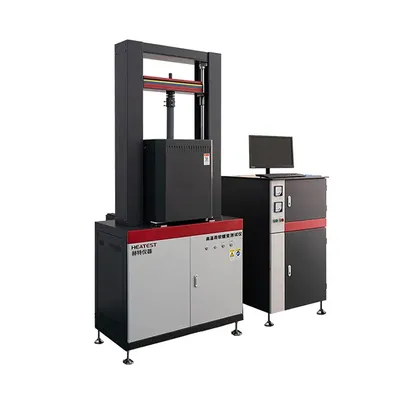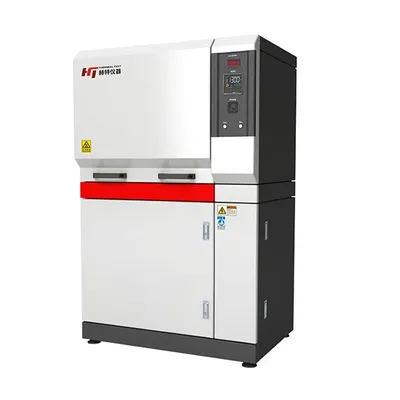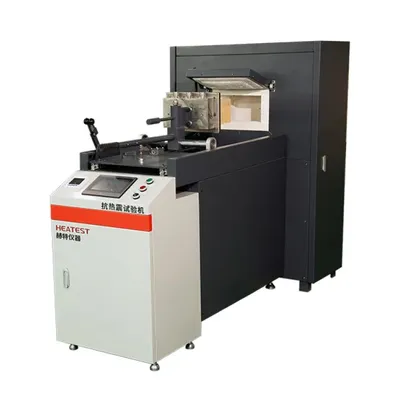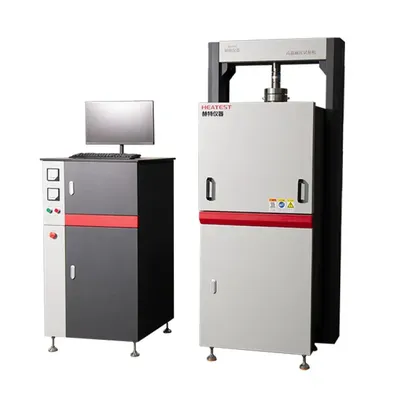
When a product fails during high-temperature testing, the consequences ripple far beyond the lab. Lost development time, scrapped prototypes, and delayed time-to-market are just the beginning. Yet many test failures stem not from the product itself, but from the testing equipment. Temperature overshoot, uneven thermal distribution, and slow stabilization introduce variables that mask true product performance. Precision high temperature chambers, engineered with advanced control systems and uniform airflow, eliminate these variables. This article examines how choosing the right chamber can systematically reduce test failures—and why HEATEST Instrument has become a trusted partner for industries demanding repeatable, reliable thermal testing.
Why Tests Fail: Root Causes in Thermal Testing
Understanding the sources of failure is the first step toward prevention. In high-temperature testing, three factors dominate:
- Temperature overshoot: When a chamber exceeds the set point, even briefly, sensitive components may experience thermal stress beyond specification. Many standard chambers overshoot by 5°C or more during ramp-up.
- Uneven temperature distribution: Variations across shelves or vertical zones cause inconsistent results. A product at the top of the chamber might be 2°C hotter than one at the bottom, invalidating comparative data.
- Stabilization delays: Slow recovery after door openings or load changes extends test cycles and introduces drift. Unstable environments produce non-repeatable data.
These root causes are amplified in low-cost chambers that lack precise control algorithms, inadequate insulation, or suboptimal airflow design. The result is a high rate of false positives or false negatives—tests that indicate failure when the product is actually good, or vice versa.
How Precision High Temp Chambers Eliminate Variability
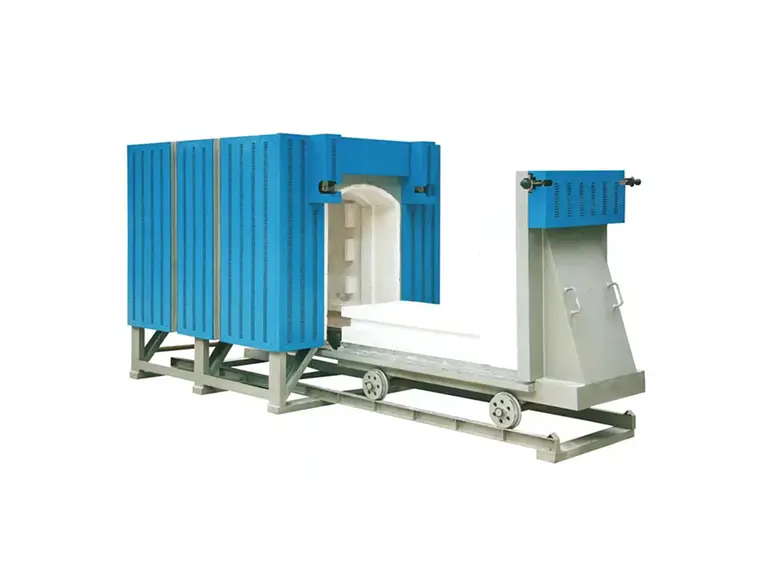
Precision high temperature chambers address each root cause through targeted engineering. HEATEST Instrument's chambers, for example, incorporate several critical technologies:
Advanced PID Control with Auto-Tuning
Proportional-Integral-Derivative (PID) controllers with adaptive tuning minimize overshoot to less than 0.5°C. Instead of a single standard setting, the system continuously adjusts heating power based on real-time feedback from multiple sensors. This ensures that the chamber reaches the set point quickly without exceeding it, protecting test samples from unintended thermal shock.
Vertical and Horizontal Airflow Uniformity
Uneven temperature distribution is eliminated through a combination of high-cfm fans and scientifically designed ductwork. HEATEST Instrument uses a patented laminar flow baffle system that creates uniform air velocity across all test zones. Typically, temperature uniformity within a precision chamber is maintained at ±0.5°C, compared to ±2°C or worse in standard chambers.
Fast Recovery and Load Compensation
When large thermal masses are introduced (e.g., metal parts, electronic assemblies), the chamber must recover rapidly to maintain set point. Precision chambers pre-calculate required energy and use predictive algorithms to anticipate load effects. This reduces recovery time by up to 60% compared to basic models, ensuring stable conditions throughout the test.
Comparison: Precision Chambers vs. Standard Chambers
To help you evaluate, the following table contrasts key performance metrics between precision high temp chambers (like those from HEATEST Instrument) and typical standard chambers on the market.
- Temperature Control Accuracy: Precision ±0.1°C / Standard ±1.0°C
- Temperature Uniformity: Precision ±0.5°C / Standard ±2.0°C
- Overshoot at Ramp: Precision <0.5°C / Standard 3-5°C
- Recovery Time after Door Open: Precision <2 min / Standard 5-10 min
- Data Logging & Feedback Loop: Precision 10 readings/sec / Standard 1 reading/10 sec
- Fail-Safe Alarms: Precision multi-zone / Standard single-zone
These differences translate directly into fewer test failures. For example, a precision chamber's ability to hold ±0.5°C uniformity across 30 test points means every sample experiences identical conditions. Standard chambers with ±2°C variation might cause one sample to fail while an identical one passes, creating confounding results.
Real-World Impact: Reducing False Failures in Electronics and Materials Testing
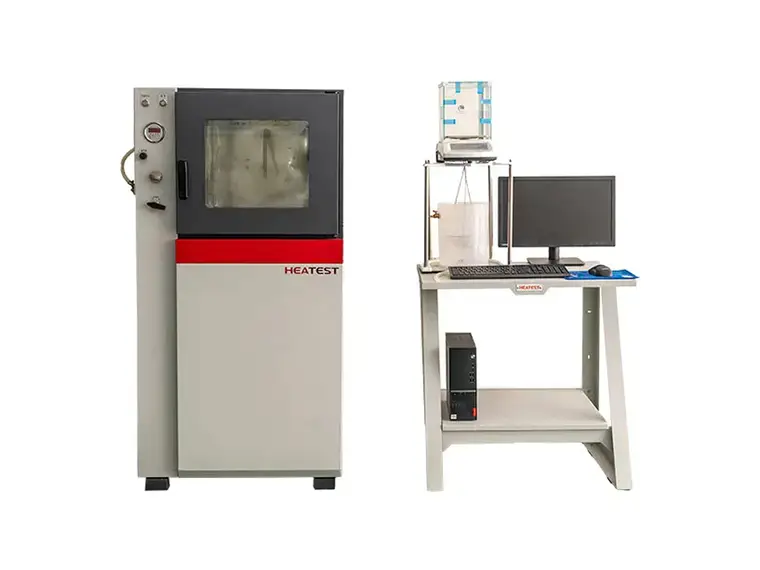
Consider an electronics manufacturer qualifying new circuit boards for automotive under-hood applications. The test profile requires 125°C for 1000 hours. Using a standard chamber, the team saw a 12% failure rate. Investigation revealed that the chamber's temperature overshoot (spikes to 130°C) caused solder joint micro-cracks—an artifact of testing, not a design flaw. After switching to a HEATEST Instrument precision high temp chamber, the same boards showed only a 2% failure rate—all genuine defects. The chamber saved nine out of ten false failures, accelerating qualification and reducing rework costs by over $50,000 per product launch.
Similarly, in materials testing—such as evaluating polymers for high-temperature degradation—uniformity is critical. A 1°C difference across a polymer sample can shift glass transition temperature readings by several degrees. Precision chambers eliminate this source of error, producing data that researchers can trust for publication and certification.
Why HEATEST Instrument Stands Out
Not all precision chambers deliver the same level of performance. HEATEST Instrument has built a reputation in thermal testing through three differentiators:
- Custom-engineered solutions: Chambers are designed for specific load sizes, temperature ranges (up to 300°C standard, custom to 500°C+), and ramp rates. This reduces over-engineering and improves cost-efficiency.
- Built-in validation compliance: Each chamber ships with NIST-traceable calibration, and the control system supports automated 3-point mapping per AMS 2750F and ISO 17025 standards—saving customers the expense of external validation.
- Predictive maintenance alerts: HEATEST Instrument's chambers continuously monitor heater performance, blower efficiency, and door seal integrity. Alerts warn of pending issues before they affect test results, reducing unplanned downtime.
When you purchase from HEATEST Instrument, you are not just buying hardware; you are investing in a system that actively prevents failures.
Summary: Your Path to Reliable High-Temperature Testing
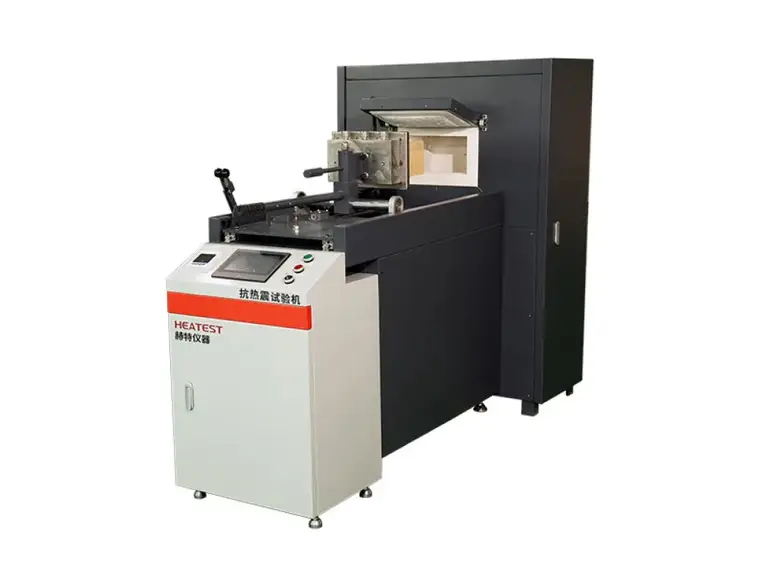
Reducing test failures begins with understanding the true causes: temperature overshoot, non-uniformity, and slow stabilization. Precision high temp chambers solve these problems through advanced control, uniform airflow, and rapid recovery. By selecting a chamber from HEATEST Instrument, you gain validated performance that eliminates environmental variables—so your test results reflect product capability, not equipment limitation. Whether you are qualifying electronics, screening materials, or performing accelerated life testing, the right chamber transforms your testing process from a source of frustration into a reliable foundation for decision-making.