
When evaluating high temperature test equipment, one specification often overshadows all others: repeatability. It is not merely a technical footnote on a datasheet; it is the bedrock upon which valid, trustable test data rests. Without repeatability, a single test result becomes meaningless, and the entire qualification process collapses into guesswork. This article dissects why repeatability matters, the risks of ignoring it, and how equipment like HEATEST Instrument’s designs deliver the consistency that engineers and quality managers depend on.
What Is Repeatability and Why Does It Matter?
Repeatability refers to the ability of a test system to produce identical results under identical conditions over multiple runs. In high temperature testing—where furnaces, ovens, or thermal chambers push materials to extreme limits—even minor deviations in temperature uniformity, heating rate, or dwell time can cascade into wildly different outcomes. Reproducibility involves different labs or operators; repeatability is about the same machine, same operator, same method. It is the first check for any credible test protocol.
Why does it matter? Because industries like aerospace, automotive, and electronics rely on high temperature tests to qualify components for safety-critical applications. A batch of turbine blades tested today must perform the same as one tested next week. If your equipment cannot repeat its own results, you cannot separate true material behavior from machine noise. This undermines every subsequent decision—from design validation to production release.
The Physics Challenge at High Temperatures
At elevated temperatures, materials expand, sensors drift, and control systems fight against thermal inertia. A standard PID controller may hold temperature within ±1°C, but that tolerance applied across a three-day test campaign can accumulate into significant variability. True repeatability demands thermal mass optimization, minimal heat loss, and precise feedback. This is where engineering quality separates commodity chambers from professional-grade equipment.
Consequences of Poor Repeatability
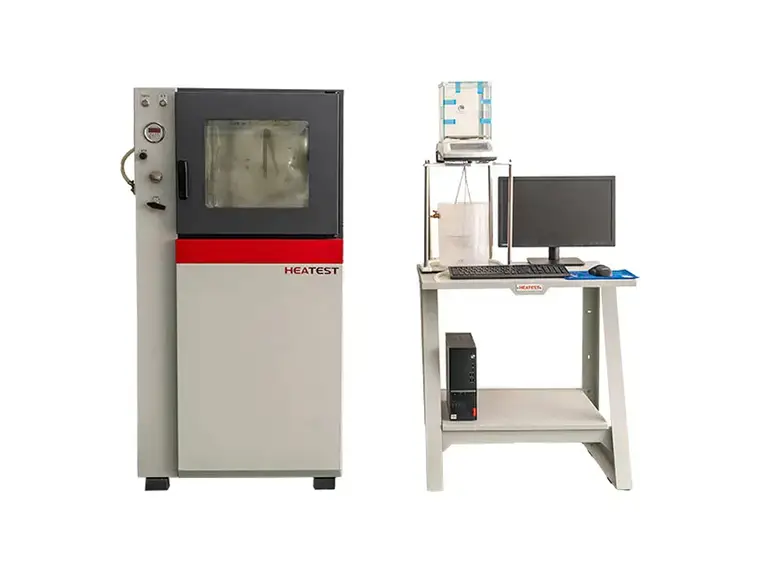
Ignoring repeatability is expensive. Consider these realistic scenarios:
- Invalid test data: A polymer compound passes its heat-resistance test on Monday but fails on Tuesday. The variation is not in the material—it is in the chamber’s temperature profile. Engineers waste weeks chasing phantom defects.
- Extended development cycles: Each non-repeatable run forces retesting. Over a product lifecycle, this can add months and thousands of dollars in labor, material, and overhead.
- Regulatory non-compliance: Standards like ASTM E2309 or IEC 60068 require documented repeatability evidence. Equipment that cannot meet these criteria risks failed audits and rejected certifications.
- Brand reputation damage: A supplier ships components that fail in the field because initial qualification relied on non-repeatable data. Recalls and liability follow.
Key Factors That Determine Repeatability in High Temperature Equipment
Not all equipment is built equal. Several design choices directly affect how consistently a chamber can repeat results:
Temperature Control System
The heart of repeatability lies in the controller. Advanced units use multi-zone PID with adaptive algorithms that compensate for heat loss during sample loading. HEATEST Instrument, for example, employs proprietary thermal balance algorithms and high-resolution platinum RTDs placed at multiple points inside the workspace. This reduces overshoot and ensures the setpoint is met with minimal deviation run after run.
Heating Element Design and Aging
Resistance wire elements degrade over time, altering heat output. Equipment that monitors element current and compensates through software maintains repeatability far longer than passive systems. Ceramic insulation and thermal breaks also prevent hot spots that distort results.
Mechanical and Environmental Isolation
External vibrations, ambient temperature fluctuations, and air drafts can all affect internal uniformity. High-end chambers include robust enclosure construction, vibration-dampening mounts, and active cooling to isolate the test volume. HEATEST Instrument chambers are designed with double-wall construction and low-emissivity interior surfaces to minimize radiative heat loss.
Data Acquisition and Documentation
Repeatability is not just about performance; it must be provable. Equipment should log every run’s temperature profile, ramping rates, and soak times. HEATEST Instrument includes built-in data logging with audit-trail capability, allowing users to verify that each test was executed identically to the previous one.
How HEATEST Instrument Delivers Repeatability—A Practical Comparison
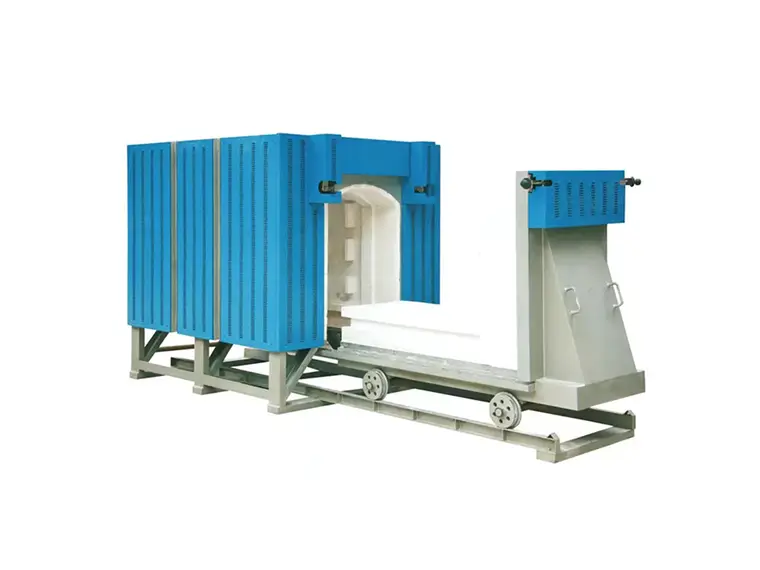
When evaluating suppliers, look for evidence, not claims. Here is how HEATEST Instrument’s approach compares to typical alternatives:
- Controls: HEATEST uses adaptive fuzzy-PID with 0.1°C resolution; many competitors use basic PID with ±1°C drift.
- Sensors: Class A platinum RTDs in all critical zones vs. standard thermocouples that degrade over temperature cycles.
- Calibration: Each unit ships with a 9-point temperature mapping report; others offer only a single-point certificate.
- Long-term stability: HEATEST validates repeatability over 100+ consecutive cycles before release; industry norm is 10 cycles.
- Heater redundancy: Multiple independent heating zones ensure uniformity even if one element drifts.
These differences translate directly into test reliability. A customer testing ceramic substrates for semiconductor processing reported a 40% reduction in re-runs after switching to HEATEST Instrument chambers.
Conclusion
Repeatability is not a luxury—it is a fundamental requirement for any high temperature test that informs critical decisions. From minimizing development risk to satisfying regulatory standards, the ability to trust every test run depends on equipment that delivers consistent, repeatable conditions. When selecting a system, demand evidence: ask for multi-point temperature mapping data, long-cycle validation reports, and design details that show thermal stability. HEATEST Instrument has built its reputation on meeting this demand, providing engineers with equipment that turns repeatability from a specification into a guarantee.