
Selecting the right control system for a high temperature test chamber is a critical decision that directly impacts the accuracy, repeatability, and operational cost of your thermal testing. Engineers and quality managers often face the choice between closed loop (feedback) and open loop (feedforward) control architectures. While both can maintain elevated temperatures, their underlying principles diverge significantly in how they respond to disturbances, compensate for thermal inertia, and hold steady-state conditions. Understanding these differences is essential to avoid costly over-specification or, conversely, inadequate performance. This article provides a technical comparison of closed loop versus open loop control in high temp test chambers, with practical guidance for procurement decisions.
Fundamentals of Open Loop Control in High Temp Chambers
An open loop control system operates without feedback from the actual chamber temperature. It calculates the required heater power based on a setpoint and a predetermined model of the chamber's thermal behavior. The controller applies a fixed output—often a proportion of full power—and assumes the chamber will reach the desired temperature. This approach is simple and inexpensive but inherently vulnerable to external perturbations such as changes in ambient temperature, voltage fluctuations, or variations in the thermal load of the test specimen.
Key Characteristics
- No temperature sensor feedback: The controller does not compare the actual temperature to the setpoint during operation.
- Susceptible to drift: Long-duration tests may experience temperature excursions because the system cannot self-correct.
- Lower hardware cost: Eliminates precision sensors and control electronics, reducing initial investment.
- Suitable for non-critical applications: Acceptable for pass/fail screening where exact temperature tolerance is not mandatory.
Closed Loop Control: Precision Through Feedback
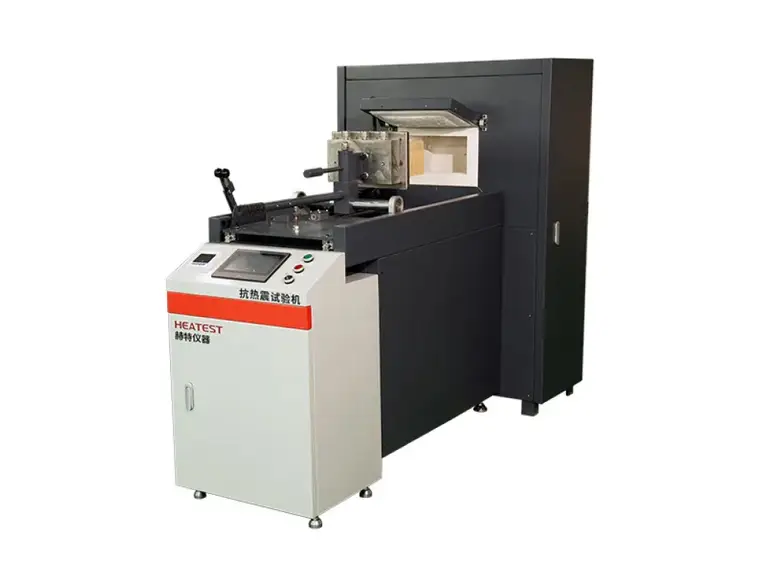
Closed loop systems, also known as feedback control, continuously measure the chamber's internal temperature using thermocouples or RTDs and compare it to the setpoint. Any deviation generates an error signal that adjusts heater power according to a control algorithm—typically PID (proportional–integral–derivative). This real-time correction compensates for heat loss, load changes, and environmental disturbances, maintaining temperature within tight tolerances.
Advantages of Closed Loop Architecture
- High accuracy: Typical steady-state stability of ±0.5°C or better across the entire operating range.
- Fast recovery: After opening the door or inserting a cold test article, the controller actively returns to setpoint more quickly than open loop.
- Repeatability: Test results are consistent across different runs and operators because the system self-optimizes.
- Compliance with standards: Many ISO, MIL-STD, and ASTM test methods mandate closed loop control for valid data.
Head-to-Head Comparison: Closed Loop vs Open Loop
| Parameter | Open Loop | Closed Loop |
|---|---|---|
| Temperature accuracy | ±2 to ±5°C typical | ±0.3 to ±0.8°C typical |
| Response to disturbances | None; drift persists | Automatically corrects |
| Control complexity | Minimal | Moderate (PID tuning required) |
| Component cost | Lower | Higher (sensor + controller) |
| Applicable test standards | Few / non-critical | Most industry standards |
| Long-term stability | Degrades with age | Consistent with recalibration |
For manufacturers like HEATEST Instrument, the choice is clear: while open loop chambers serve niche applications, the overwhelming majority of professional thermal testing demands closed loop control to meet specification requirements and ensure confidence in data.
Selecting the Right System for Your Application
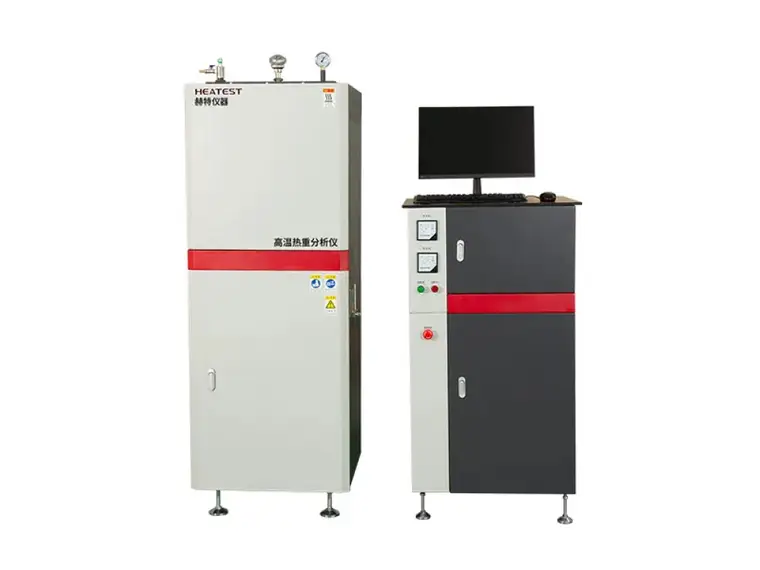
The decision matrix depends on test purpose, accuracy needs, budget, and regulatory environment. Here are common scenarios:
When to Choose Open Loop
- Rough burn-in or screening where ±3°C tolerance is acceptable.
- Short-duration tests (under one hour) where drift is minimal.
- Tight capital equipment budget with no compliance obligations.
When Closed Loop Is Essential
- Qualification testing per IEC, MIL, or ASTM standards.
- Material characterization or reliability studies requiring tight temperature control.
- Long-term aging tests (thousands of hours) where drift would invalidate results.
- Testing of temperature-sensitive electronic components.
Frequently Asked Questions
Can an open loop chamber be upgraded to closed loop?
Retrofit is possible but often impractical due to mechanical design constraints. Most open loop chambers lack sensor ports and proper controller interfaces. HEATEST Instrument recommends selecting the correct architecture at the time of purchase.
Does closed loop control consume more energy?
Not necessarily. Closed loop controllers optimize heater power in real time, often reducing average consumption compared to open loop systems that run at a fixed duty cycle regardless of need.
What is the typical price difference?
Closed loop chambers carry a 20–40% premium over equivalent open loop models, but the investment is recouped through reduced test failures and higher data integrity.
Conclusion
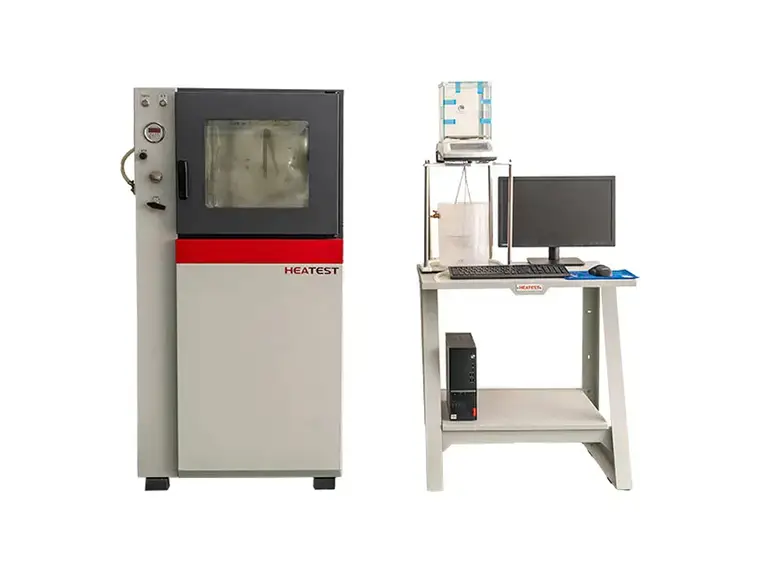
When investing in a high temperature test chamber, the control architecture should align with the criticality of your thermal data. Open loop systems serve low-accuracy, cost-driven applications, while closed loop control delivers the precision, stability, and compliance required for professional testing environments. HEATEST Instrument offers both configurations, but our engineers consistently recommend closed loop for any application where temperature tolerance below ±1°C matters. Evaluate your test protocols, standards, and long-term quality goals before making a decision.