
In high temperature testing, achieving precise and consistent thermal uniformity is critical for obtaining reliable material characterization, component validation, and quality assurance. Even small temperature gradients across the test zone can introduce significant errors in data during long-duration or rapid-cycling experiments. This article explores the fundamental factors influencing thermal uniformity, outlines engineering strategies to enhance it, and explains how HEATEST Instrument delivers advanced high temp test equipment designed to minimize temperature variations. Whether you are evaluating metals, ceramics, composites, or electronic assemblies, understanding these principles will help you select the right solution for your thermal testing needs.
1. Understanding Thermal Uniformity in High Temperature Testing
Thermal uniformity refers to the degree of temperature variation across a defined workspace within a test chamber or furnace. In high temp test equipment, it is typically expressed as a percentage or absolute difference (e.g., ±1°C) at a setpoint. Poor uniformity can lead to uneven heating of samples, resulting in inconsistent mechanical or electrical properties, premature failure, or flawed test conclusions. For standards such as ASTM E145, ISO 834, or IEC 60068, strict uniformity tolerances are mandatory.
The most common challenges come from heat losses at chamber corners, air or gas leakage, and thermal inertia of sample holders. HEATEST Instrument addresses these by employing computational fluid dynamics (CFD) analysis during design phase to predict and correct hot/cold spots.
2. Key Factors Affecting Thermal Uniformity
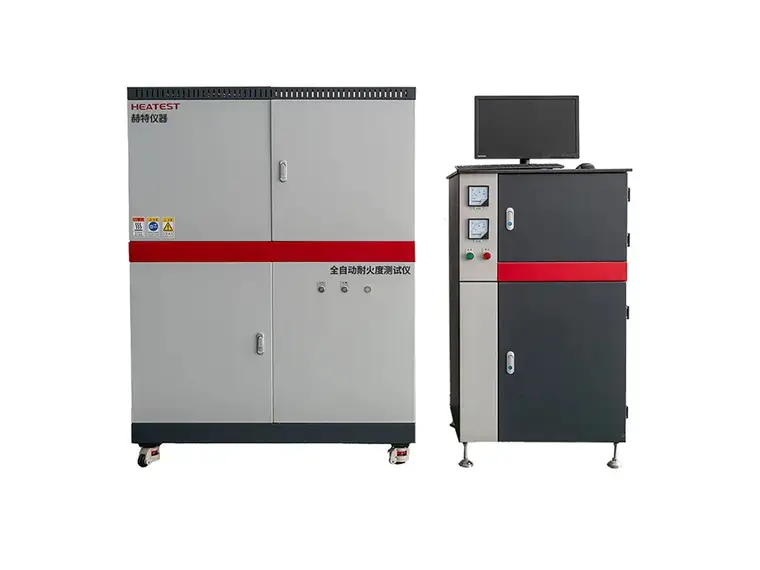
Several controllable variables influence temperature distribution inside a high-temperature test system:
- Heating Element Layout: Uneven spacing or wattage distribution creates localized overheated zones.
- Airflow / Gas Circulation: In forced-convection ovens, poor baffle design causes stagnant regions.
- Insulation Quality: Thinner or degraded insulation leads to heat loss around doors and feedthroughs.
- Temperature Controller Accuracy: Single-point control cannot compensate for gradient without multi-zone PID algorithms.
- Sample Placement & Load: Large or thermal-mass-heavy samples act as heat sinks, distorting uniformity.
By systematically optimizing each factor, manufacturers like HEATEST Instrument achieve uniformity performance as tight as ±0.5°C at 300°C and ±2°C at 1200°C in their test chambers.
3. Engineering Approaches to Improve Thermal Uniformity
3.1 Multi-Zone Independent Heating and Control
Instead of a single heating loop, dividing the chamber into top, middle, bottom, and side zones, each with its own thermocouple and PID controller, allows real-time compensation. HEATEST Instrument implements a patented multi-zone algorithm that dynamically adjusts power output to maintain flat temperature profiles even during ramp-up or sample loading.
3.2 Optimized Internal Geometry and Airflow Management
Using horizontal or vertical recirculation fans with specially shaped plenums and perforated diffusers eliminates dead zones. For vacuum or inert atmosphere testing, radiation shields and heat exchangers replace convection. HEATEST’s high temp test equipment incorporates modular baffle structures that can be reconfigured for different sample geometries.
3.3 Advanced Insulation Materials and Design
Ceramic fiber, microporous insulation, or vacuum panels reduce thermal bridging. Door seals with double gaskets prevent convective losses. HEATEST uses a proprietary ceramic-fiber composite that also resists thermal shock during rapid cycling.
3.4 Pre-Test Uniformity Validation and Calibration
Every chamber undergoes a 9-point or 16-point thermocouple mapping per AMS 2750 or other relevant standards. HEATEST Instrument provides a detailed uniformity report with each system, allowing users to verify performance before critical tests.
Below is a comparison of typical uniformity improvement measures available in the market vs. HEATEST solutions:
- Standard Industrial Oven: Single-zone control, ±5°C typical at 500°C
- HEATEST Multi-Zone Furnace: 3-5 independent control zones, ±1.5°C at 500°C
- HEATEST High Uniformity Chamber (with active gas mixing): ±0.8°C at 500°C
4. Why Choose HEATEST Instrument for Your High Temp Test Equipment
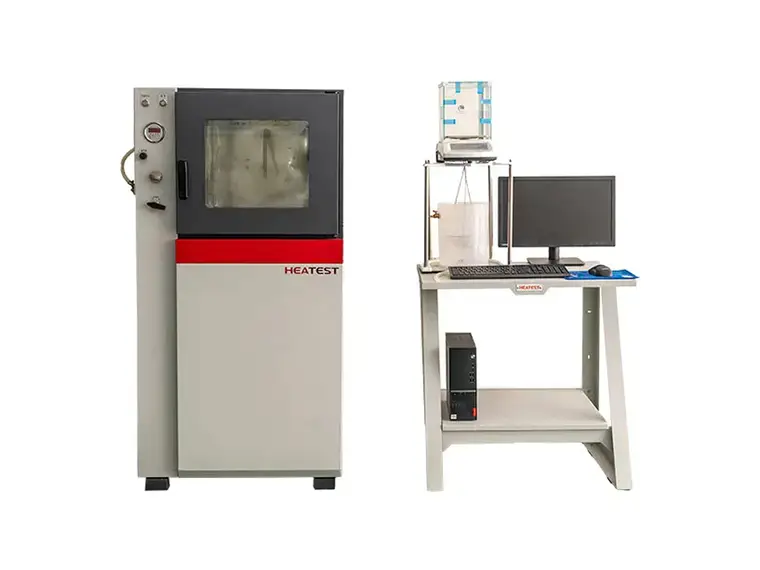
HEATEST Instrument brings over a decade of specialized experience designing thermal testing systems for aerospace, automotive, energy, and research labs. Key advantages include:
- Customizable Zone Configurations: Tailored to your sample size and test profile.
- Integrated Data Logging: Real-time uniformity monitoring with export capability.
- Robust Construction: Stainless steel chambers with easy-access ports for additional probes.
- Global Support: On-site calibration and remote diagnostic service.
When you need high temp test equipment that delivers repeatable results under demanding conditions, HEATEST’s thermal uniformity engineering sets the benchmark.
5. Conclusion & Best Practices
Achieving optimal thermal uniformity requires a combination of smart design, precise control, and regular maintenance. For buyers evaluating equipment, always request uniformity data under your specific operating conditions. HEATEST Instrument offers free pre-purchase uniformity simulations for your test requirements. Contact our applications engineers to discuss how our high temp test equipment can improve your testing accuracy and throughput.